Compare Landscape Lighting: Comprehensive Engineering Guide
The architectural nightscape of contemporary residential and commercial properties requires far more than rudimentary security illumination. Modern exterior planning demands a sophisticated discipline of electrical engineering, optical physics, and psychological spatial design. Property managers and estate owners view outdoor lighting as a crucial extension of primary interior living and working environments. Furthermore, they demand precise luminance control, glare reduction, and seamless integration with complex architectural forms.
Executing durable low-voltage electrical infrastructure across intricate property boundaries requires navigating strict technical parameters. Specifically, voltage drop calculations across long wire runs dictate transformer sizing and cable gauge selection. Meanwhile, dark-sky compliance mandates protect nocturnal ecosystems from light pollution. Without rigorous photometric planning and waterproof wire splicing, ambitious illumination projects fail rapidly under the stress of subterranean moisture and weathering.
Achieving optimal results requires balancing aesthetic ambition against municipal lighting ordinances and practical maintenance realities. Every single component—from toroidal core transformers to marine-grade brass fixture housings—determines structural and electrical longevity. Therefore, this comprehensive reference manual provides an exhaustive examination of the structural, electrical, and financial dimensions shaping modern architectural exterior illumination.
Understanding “compare landscape lighting”
The pursuit to compare landscape lighting options requires looking past surface-level aesthetic trends. Instead, practitioners must master the physics of lumen distribution, color temperature rendering, and beam spread angles. A common misconception treats residential outdoor lighting as a plug-and-play retail exercise. Consequently, this ignores the complex electrical load calculations required to prevent lamp flicker and premature LED driver burnout. When wire gauges are undersized over extended runs, voltage drop starves remote fixtures of necessary power.
Oversimplification frequently stems from applying uniform illumination templates across diverse property topologies. While a narrow-beam spotlight suffices for a modest deciduous tree, large architectural facades require wide flood optics and precise Kelvin balancing. Furthermore, when stakeholders properly compare landscape lighting configurations, they must coordinate with municipal dark-sky regulations and light trespass ordinances. Many municipalities enforce strict caps on fixture candela output at property lines. Consequently, designers must integrate shielded cowls and precise optical cutoffs directly into the layout.
Another layer of complexity involves harmonizing human psychological comfort with functional safety illumination. Because modern parcels feature intricate pathways, level changes, and water features, site planning must account for dark adaptation and glare mitigation. Therefore, evaluating effective lighting design requires reconciling broad architectural visions with strict electrical and regulatory realities.
Deep Contextual Background
The evolution of residential and commercial exterior illumination reflects broader shifts in semiconductor technology, electrical engineering, and architectural design. During the mid-twentieth century, outdoor lighting was largely primitive. Master plans favored high-voltage incandescent floodlights mounted directly onto exterior walls. These systems consumed massive amounts of electricity, generated extreme heat, and attracted swarming insects due to broad-spectrum ultraviolet emissions.
As the lighting industry transitioned to low-voltage 12-volt halogen systems in the late twentieth century, designers gained unprecedented control over fixture placement. However, high energy consumption and short bulb lifespans remained persistent operational challenges. The subsequent arrival of solid-state light-emitting diode technology revolutionized the field entirely. LEDs provided high luminous efficacy, narrow color temperature control, and exceptional operational lifespans.
Today, the industry operates at the intersection of electrical engineering, wireless smart-home protocols, and photometric software modeling. Modern design firms utilize advanced digital simulation tools to map foot-candle distribution across complex multi-acre sites. This systemic shift transformed basic backyard security lighting into permanent, highly efficient architectural art forms.
Conceptual Frameworks and Mental Models
Evaluating and executing high-end exterior lighting projects benefits from structured analytical models isolating electrical, optical, and environmental variables.
-
The Voltage Drop Calculation Vector measures electrical resistance across wire runs to ensure every fixture receives the mandatory operating voltage range.
-
The Photometric Beam Spread Matrix calculates candela output, field angles, and cutoff boundaries to prevent light trespass onto neighboring parcels.
-
The Color Rendering Index (CRI) Hierarchy evaluates light source spectral fidelity to ensure natural foliage and masonry tones appear accurate at night.
-
The Luminaire Thermal Dissipation Model tracks heat sink efficiency within sealed brass and copper housings to prevent premature LED driver degradation.
Key Categories or Variations
Architectural exterior illumination spans several distinct functional classifications. Each presents specific trade-offs regarding visual impact, installation complexity, and electrical load.
| Lighting Category | Primary Fixture Type | Core Structural Advantage | Key Environmental Trade-Off |
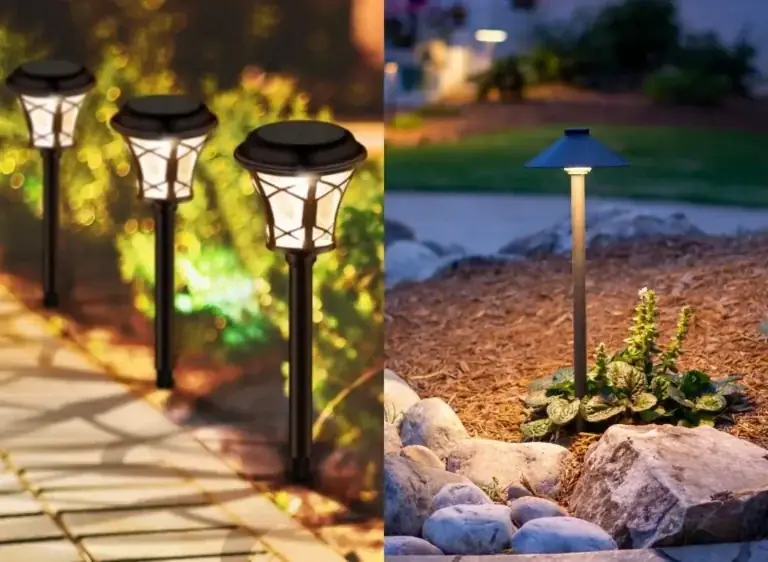
| Tier 1: Path & Spread Lighting | Low-profile mushroom and cowled bollards | Illuminates tripping hazards and walkways safely without vertical glare. | High fixture density required; vulnerable to physical damage from lawn maintenance equipment. |
| Tier 2: Up-Lighting & Grazing | Heavy-duty brass bullet and well lights | Highlights architectural textures, masonry facades, and specimen tree canopies. | Improper aiming causes severe upward light pollution into the night sky. |
| Tier 3: Down-Lighting & Moonlighting | Tree-mounted wide-beam directional fixtures | Mimics natural moonlight; casts organic shadows across patios and paths. | Requires running high-vulnerability cables through living tree trunks and limbs. |
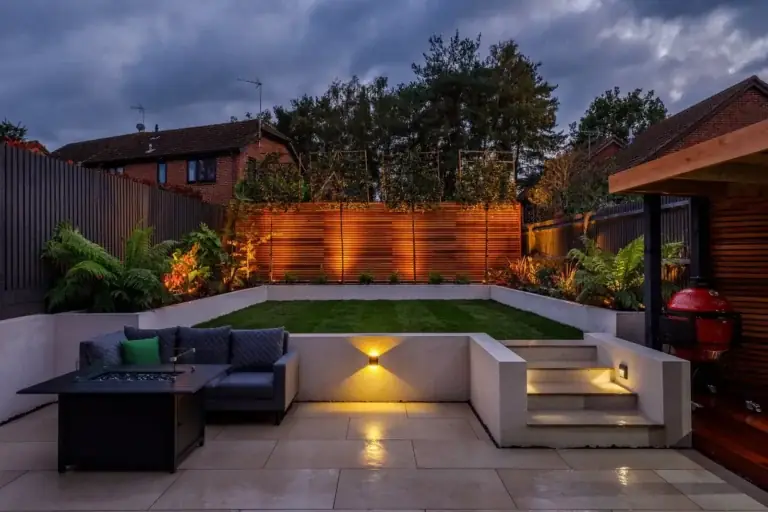
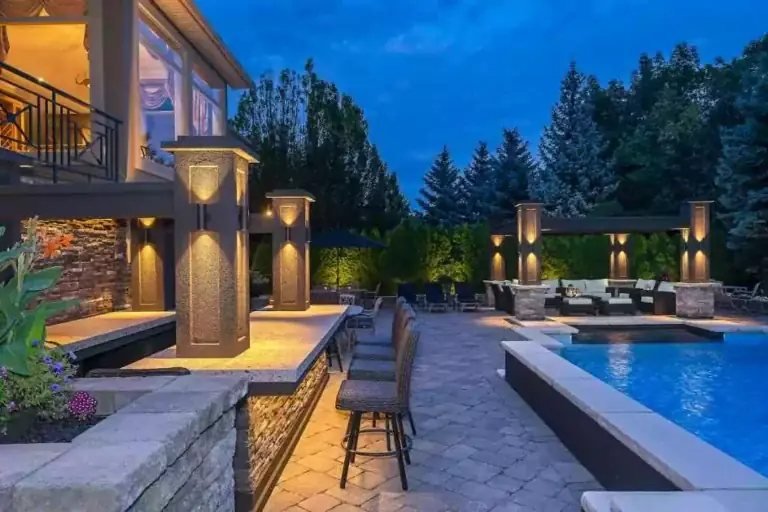
| Tier 4: Hardscape & Step Lighting | Linear LED strips, recessed paver face lights | Integrates seamlessly into retaining walls and stairs for subtle safety lighting. | Complex installation requires precise pre-wiring during masonry construction. |
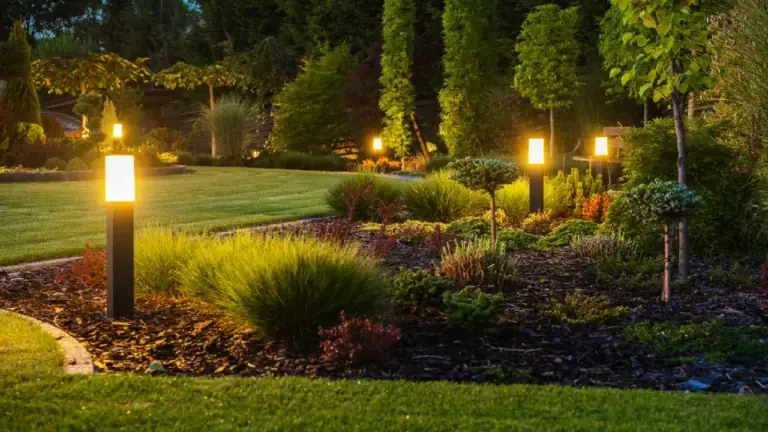
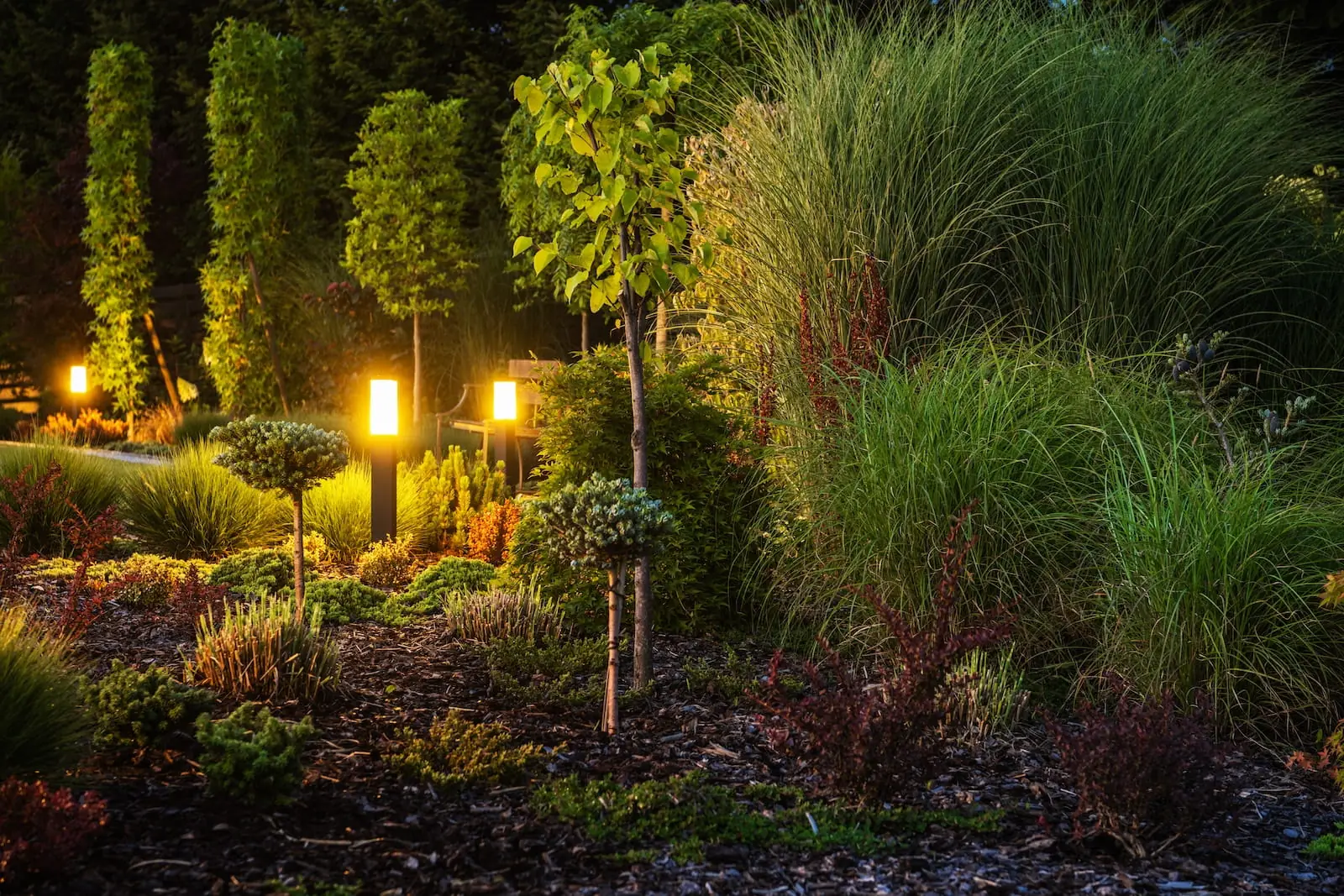
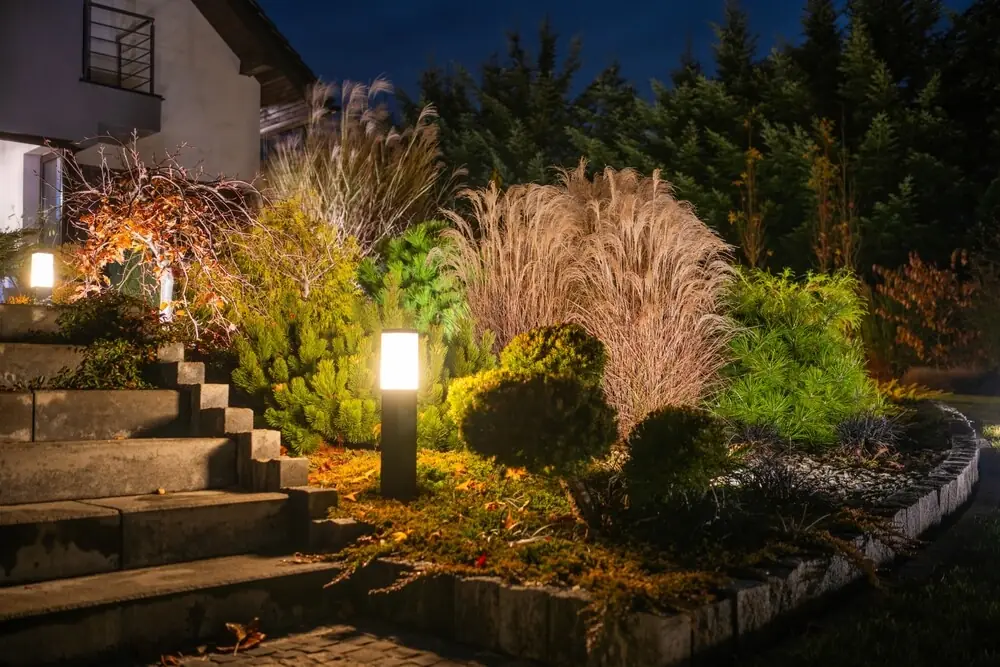
When professionals compare landscape lighting systems, they must align category selections with architectural style and site-specific environmental conditions. Path lighting provides essential pedestrian safety, but requires careful spacing to avoid creating a runway effect. Conversely, up-lighting accentuates grand structural masonry, though it demands strict angle adjustments to prevent light pollution. Meanwhile, hardscape step lighting integrates directly into retaining walls, yet requires meticulous pre-planning during masonry construction.
Detailed Real-World Scenarios
Understanding how exterior lighting layouts perform under environmental stress requires examining specific situational archetypes across diverse residential environments.
The Sloped Yard Tree Canopy Illumination
-
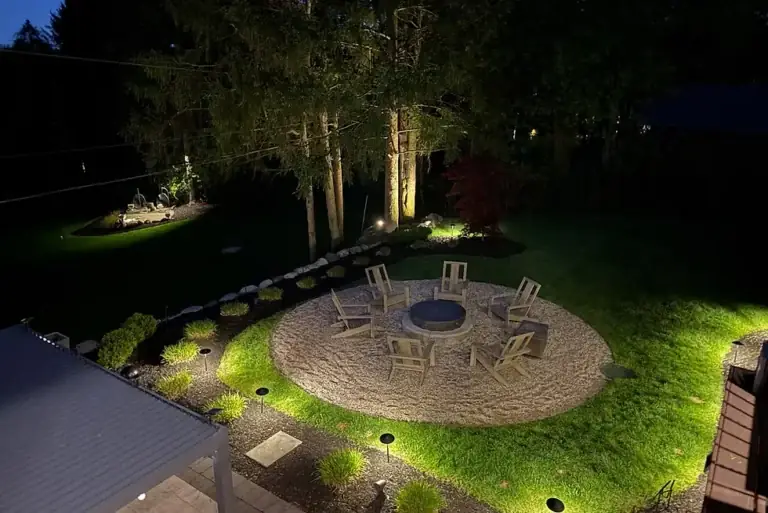
Operational Constraints: A residential property in Ohio featured a mature deciduous tree canopy on a sloping backyard that suffered from deep shadows and uneven terrain visibility.
-
Core Decision Points: The design team specified high-output LED up-lights equipped with spread lenses and honeycomb louvers to eliminate lateral glare.
-
Failure Modes: Utilizing unshielded floodlights would have blinded homeowners looking out second-story windows and violated municipal dark-sky codes.
-
Second-Order Effects: The precise louver shielding directed 100 percent of the light flux upward into the canopy, creating a dramatic volumetric lighting effect without causing light trespass.
The Historic District Path Restoration
-
Operational Constraints: A suburban property within a strict historic preservation district required subtle pathway safety lighting without modern visible fixtures.
-
Core Decision Points: Contractors installed low-voltage copper path lights with warm 2700K color temperatures and integrated solid brass cowls.
-
Failure Modes: Selecting bright, cool-white 5000K LED luminaires violated historic district guidelines and ruined the subtle evening ambiance.
-
Second-Order Effects: The warm low-output fixtures provided safe navigation along stone walkways while maintaining complete aesthetic harmony with the historic neighborhood.
The High-Heat Architectural Facade Grazing
-
Operational Constraints: A modern estate in Arizona required extensive facade grazing on rough-hewn stone walls exposed to intense daytime solar radiation.
-
Key Structural Solutions: Engineers specified solid brass fixtures with remote multi-tap magnetic transformers to combat line loss over long desert acreage runs.
-
Failure Modes: Utilizing cheap aluminum fixtures with integrated electronic drivers caused rapid thermal breakdown and premature failure under triple-digit desert heat.
-
Second-Order Effects: The heavy solid-brass housings dissipated heat efficiently, while the remote magnetic transformer handled long wire runs without voltage drop issues.
The Damp Woodland Water Feature
-
Operational Constraints: A waterfront property in Washington state required submersible illumination for a complex stone pond and waterfall feature exposed to constant moisture.
-
Core Decision Points: Designers selected IP68-rated submersible bronze fixtures wired through gel-filled waterproof connectors and protected by ground fault circuit interrupters.
-
Failure Modes: Using standard above-ground fixtures near the waterline led to immediate moisture ingress, electrical short circuits, and system tripping.
-
Second-Order Effects: The marine-grade bronze submersible units withstood continuous aquatic exposure, illuminating cascading water streams safely over multiple wet winters.
Planning, Cost, and Resource Dynamics
Executing elite exterior lighting installations involves navigating complex financial structures extending far beyond basic bulb and fixture estimates. Total project expenditures must account for multi-tap magnetic transformers, direct-burial cable networks, trenching labor, and specialized control automation.
| Financial Variable | Average Baseline Range | Primary Cost Drivers & Variability |
| Transformer & Control Infrastructure | $1,500 to $6,000+ per system | Wattage capacity, magnetic vs electronic cores, smart-home zoning. |
| Direct-Burial Cabling & Trenching | $2,000 to $8,000 per site | Cable gauge (10 AWG to 12 AWG), trench depth, hardscape boring. |
| Solid-Brass & Copper Luminaires | $150.00 to $650.00+ per fixture | Material grade, LED module quality, optical lens accessories. |
| Professional Photometric Design & Labor | $2,500 to $10,000+ project total | Site scale, complex architectural tree climbing, zoning compliance. |
The primary financial consideration in lighting planning involves the high cost of heavy-gauge direct-burial wire and industrial-grade transformers. Attempting to reduce upfront construction budgets by utilizing thin 14-gauge wire over long distances guarantees severe voltage drop and dim, inefficient lamp output. Stakeholders who prioritize long-term asset value allocate capital toward robust electrical infrastructure during the initial phase.
Tools, Strategies, and Support Systems
Navigating the execution of complex landscape lighting installations requires specialized electrical testing hardware and trenching machinery.
-
Digital True-RMS Multimeters measure operating voltage at socket terminals to verify that voltage drop remains within acceptable 10.8V to 11.6V limits.
-
Vibratory Cable Plows install direct-burial low-voltage wire underground without destroying established turf lawns.
-
Photometric Design Software calculates precise foot-candle levels and beam spreads across digital property models.
-
Wire Strippers and Heavy-Duty Heat-Shrink Crimp Connectors ensure permanent waterproof seals on all subterranean splices.
-
Smart-Home Astronomical Timers automate dusk-to-dawn schedules based on precise global positioning coordinates.
-
Telescopic Ladder Rigs and Climbing Harnesses position tree-mounted down-lighting fixtures safely within mature canopy branches.
Risk Landscape and Failure Modes
Even meticulously engineered landscape lighting systems remain vulnerable to systemic environmental, electrical, and physical failure modes over time.
-
Voltage Drop Starvation: Undersized cable gauges combined with excessive fixture loads cause remote lamps to emit a dim, yellowish hue.
-
Subterranean Moisture Ingress: Utilizing cheap twist-on wire connectors instead of silicone-filled gel caps leads to soil corrosion and short circuits.
-
Landscape Maintenance Shear: Commercial lawnmowers and string trimmers strike improperly placed path lights, snapping fixture stems at ground level.
-
Thermal Driver Breakdown: Enclosing cheap electronic LED drivers in unventilated boxes causes overheating and premature component failure.
Governance, Maintenance, and Long-Term Adaptation
Maintaining elite architectural standards across exterior lighting installations requires disciplined operational governance and ongoing seasonal review cycles. Plant growth, architectural weathering, and soil movement gradually alter lighting angles and beam obstructions. Therefore, property managers and homeowners must adhere to formal inspection protocols. Annual fixture alignment checks, lens cleaning, and low-voltage transformer output audits preserve long-term asset integrity.
This proactive governance model ensures that overgrown foliage blocking light beams or shifting ground freezing is managed before compromising the nighttime aesthetic. Regular checks of waterproof connections and timer schedules prevent environmental stress from disrupting system performance.
Measurement, Tracking, and Evaluation
Assessing the ongoing success of an exterior lighting installation involves monitoring objective electrical metrics alongside qualitative aesthetic appraisal indicators.
-
Leading Indicators: Verified terminal voltage test logs (11.0V to 11.5V at furthest fixture), approved dark-sky compliance checks, and robust multi-tap transformer capacity margins.
-
Lagging Indicators: Zero electrical short circuits over multiple freeze-thaw cycles, pristine fixture finish stability, and reliable automated timer operation.
-
Qualitative Signals: Exceptional balance of shadow and light across architectural facades, absence of blinding glare along pathways, and seamless nighttime visual depth.
Common Misconceptions and Oversimplifications
-
Myth: Low-voltage 12-volt landscape lighting systems are entirely safe and do not require professional electrical planning. Correction: High total wattage loads on long wire runs draw massive amperage, requiring heavy-gauge wire and careful transformer balancing to prevent overheating.
-
Myth: Any LED bulb can be dropped into an existing exterior fixture regardless of driver compatibility. Correction: Mismatching LED lamps with magnetic or electronic transformers causes severe flickering, buzzing, and premature component burnout.
-
Myth: Brighter lighting automatically equates to a more secure and aesthetically pleasing landscape design. Correction: Over-lighting washes out architectural detail, creates harsh glare, and violates dark-sky municipal lighting ordinances.
-
Myth: Standard twist-on wire nuts provide a permanent waterproof connection for direct-burial low-voltage cables. Correction: Subterranean moisture corrodes standard wire nuts instantly; connections require gel-filled waterproof wire caps or heat-shrink splices.
Ethical, Practical, and Contextual Considerations
Beyond pure aesthetic enjoyment and property safety, responsible landscape lighting design respects municipal dark-sky initiatives, nocturnal wildlife habitats, and neighboring property privacy. Excessive upward lighting disrupts migratory bird patterns and nocturnal insect populations while polluting the night sky. Therefore, professional planning mandates utilizing fully shielded 2700K warm-spectrum fixtures that direct light strictly downward. Furthermore, incorporating motion sensors and astronomical zoning timers minimizes unnecessary energy consumption during late-night hours.
Conclusion
When architects and property managers effectively compare landscape lighting products, systems, and design strategies, they uncover the critical intersection of electrical engineering, optical physics, and environmental science. True architectural longevity is achieved not through hasty fixture placement, but through rigorous adherence to voltage drop calculations, heavy-gauge wire selection, and dark-sky optical control. By evaluating lighting choices through comprehensive technical frameworks, property owners establish permanent, efficient, and refined nighttime environments that stand the test of time.