Best Landscape Lighting for Pathways: Definitive Expert Guide
The architectural delineation of outdoor pathways, walkways, and transit corridors across residential and commercial properties demands an uncompromising synthesis of low-voltage electrical engineering, optical science, and pedestrian safety planning. Modern exterior design treats nighttime walkways as continuous architectural ribbon elements, requiring precision optical control rather than indiscriminate, glaring illumination. Discerning property owners, landscape architects, and estate managers demand professional-grade low-voltage distribution, architectural-grade metallurgy, and sophisticated optical cutoff shielding. Furthermore, executing these systems mandates deep technical proficiency to navigate regional climatic extremes, local municipal codes, and complex pathway topography.
Achieving lasting structural and aesthetic excellence when establishing the best landscape lighting for pathways installations involves balancing luminous efficacy and safety foot-candle requirements against long-term maintenance realities. Every component—from multi-tap toroidal core magnetic transformers to solid cast bronze, solid sand-cast brass, and marine-grade copper fixture housings—determines the operational lifespan of the installation. Subterranean distribution networks must endure decades of soil compaction, root expansion, and severe seasonal freeze-thaw cycles without experiencing voltage drop or ground faults. Without rigorous photometric planning and professional-grade installation methodologies, high-value path lighting assets degrade rapidly under environmental stress.
This comprehensive reference manual provides an exhaustive examination of the structural, electrical, and financial dimensions shaping premier pathway illumination across the domestic market. By exploring advanced wiring typologies, thermal management principles, and optical distribution frameworks, this guide serves as an authoritative resource for professionals and property stewards seeking absolute mastery over elite nocturnal walkway design.
Understanding “best landscape lighting for pathways”
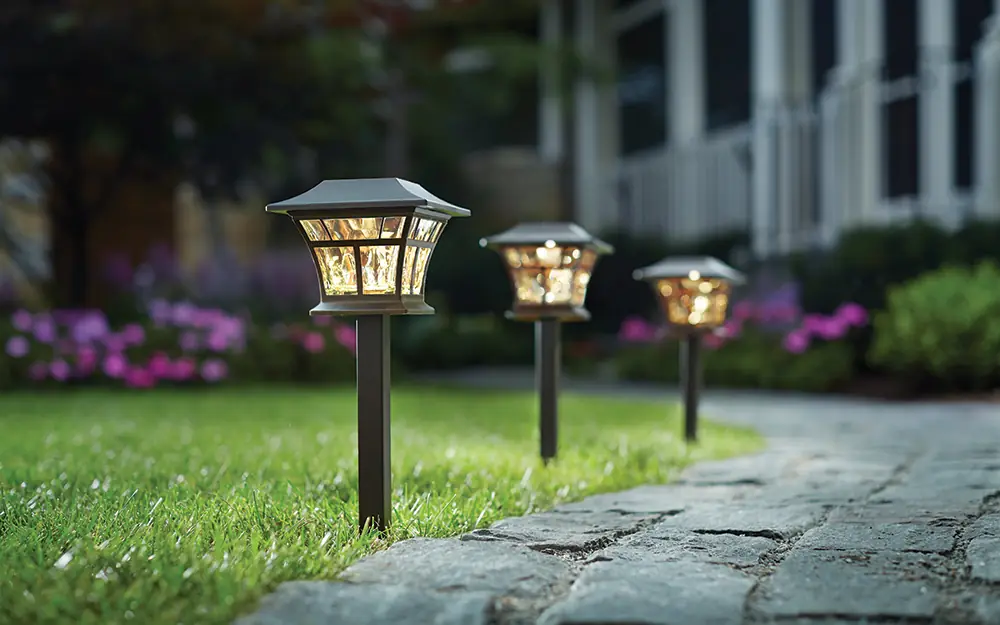
The pursuit of excellence in executing the best landscape lighting for pathways installations requires moving past superficial retail aesthetics and generic design templates. Instead, practitioners must master the physics of luminous efficacy, thermal dissipation, candela distribution, and copper conductor sizing. A common misconception treats high-end pathway illumination as a simple matter of deploying expensive mushroom fixtures at regular intervals along a sidewalk. Consequently, this ignores the complex electrical load calculations and optical design choices required to prevent lamp dimming, thermal driver burnout, and intrusive light spill. When systems are improperly balanced, excessive lumens wash out pathway contours and create dangerous glare hazards for pedestrians.
Oversimplification frequently stems from applying uniform illumination schemes across vastly different regional topographies throughout the country. While a modest concrete suburban walkway permits basic linear wiring, sprawling multi-acre estate pathways require sophisticated multi-transformer zoning, high-capacity 10-gauge direct-burial cable networks, and astronomical automation. Furthermore, learning how to engineer the best landscape lighting for pathways projects demands strict compliance with regional dark-sky ordinances and municipal light trespass laws. Many jurisdictions enforce rigid caps on lateral glare and light pollution along property boundary paths. Consequently, planners must integrate precision cowls, louvered faceplates, and warm 2700K color temperatures directly into the master layout.
Another layer of complexity involves harmonizing human physiological dark adaptation with functional safety and architectural expression. Because high-end properties feature intricate stone pavers, winding flagstone trails, multi-tier steps, and grade changes, site planning must account for uniform horizontal and vertical illuminance ratios. Therefore, evaluating effective elite pathway lighting strategies requires reconciling broad architectural visions with strict electrical, environmental, and regulatory realities.
Deep Contextual Background
The evolution of pedestrian pathway illumination across North America reflects broader shifts in semiconductor technology, electrical engineering, and luxury construction standards. During the mid-twentieth century, walkway lighting was largely primitive and plagued by severe energy inefficiencies. Master plans favored high-voltage 120-volt incandescent bollards and wall-mounted floodlights. These systems consumed massive amounts of electricity, generated extreme heat, and attracted swarming insects due to broad-spectrum ultraviolet emissions.
As the industry transitioned to low-voltage 12-volt halogen systems in the late twentieth century, optical control improved, but energy consumption remained stubbornly high. Halogen lamps drew significant amperage, forcing property owners to install large transformers and heavy wire networks that escalated installation and maintenance challenges. The subsequent arrival of solid-state light-emitting diode technology revolutionized the luxury market entirely. LEDs provided unprecedented luminous efficacy, drastically cutting wattage demands while extending operational lifespans from thousands to tens of thousands of hours.
Today, the domestic industry operates at the intersection of electrical engineering, smart-home automation, and rigorous UL safety certification. Leading manufacturers and professional design firms establish benchmarks for heavy-duty brass metallurgy, precise 360-degree or directional optical distribution, and architectural integration. This systemic shift transformed basic backyard security lighting into a highly disciplined science of pedestrian optical and electrical engineering tailored to the distinctive demands of high-end American properties.
Conceptual Frameworks and Mental Models
Evaluating and executing elite pathway lighting projects benefits from structured analytical models isolating electrical, optical, and environmental variables.
-
The Horizontal Illuminance Grid measures foot-candle levels directly on the walking surface to ensure safe navigation without creating blinding pools of high contrast.
-
The Voltage Drop Threshold Vector calculates copper conductor resistance against run length to ensure remote pathway fixtures maintain operating voltages between 10.8V and 11.5V.
-
The Glare Shielding Cutoff Angle establishes precise physical shielding requirements to prevent light from entering the direct line of sight of walking pedestrians.
-
The Subterranean Moisture Isolation Model tracks dielectric grease application and heat-shrink encapsulation to eliminate ground faults along extensive pathway runs.
Key Categories or Variations
Architectural pathway illumination hardware spans several distinct structural classifications, each presenting specific trade-offs regarding material durability, optical performance, and installation complexity.
| Fixture Category | Primary Metallurgical Build | Core Structural Advantage | Primary Environmental Vulnerability |
| Tier 1: Solid Cast Brass Hat Path Lights | Marine-grade bronze and heavy cast brass | Exceptional resistance to corrosion, soil acids, and foot traffic impact. | High initial capital cost; heavy fixture weight requires secure mounting stakes. |
| Tier 2: Solid Copper Stem Path Fixtures | Pure spun and heavy extruded copper | Develops a natural protective patina that blends into organic garden beds. | Patina color shift requires careful client expectation management. |
| Tier 3: Recessed Step and Wall Washers | High-grade stainless steel or cast brass | Completely flush profile eliminates physical tripping hazards along stairways. | Requires precise core-drilling into masonry or concrete during hardscape construction. |
| Tier 4: Composite Polymer Walkway Bollards | High-density engineered composite polymers | Immune to salt-water corrosion and coastal air degradation entirely. | Lower structural load-bearing capacity compared to solid metal housings. |
When professionals evaluate the best landscape lighting for pathways requirements, they must align category selections with regional environmental demands. In coastal regions or high-humidity southern states, solid cast brass and bronze fixtures are mandatory to prevent rapid oxidation. Conversely, in arid southwestern climates, thermal management and UV-resistant powder coats take precedence. Meanwhile, northern states requiring freeze-thaw resilience demand flexible cabling and robust waterproof potting compounds to survive sub-zero soil movement along walkways.
Detailed Real-World Scenarios
Understanding how pathway lighting installations perform under diverse environmental stress requires examining specific situational archetypes across various North American geographic zones.
The Coastal Florida Salt-Spray Walkway
-
Operational Constraints: A luxury coastal estate in Florida required extensive pathway illumination exposed to constant salt-laden air, high humidity, and aggressive soil salinity along sandy walking trails.
-
Core Decision Points: The design team specified marine-grade solid brass hat path fixtures, stainless steel fasteners, and silicone-sealed terminal blocks.
-
Failure Modes: Utilizing standard powder-coated aluminum path lights caused rapid galvanic corrosion and paint peeling within twelve months in neighboring installations.
-
Second-Order Effects: The solid brass housings developed a rich dark patina while maintaining complete structural and electrical integrity against corrosive salt spray over multiple seasons.
The New England Freeze-Thaw Flagstone Path
-
Operational Constraints: A historic property in Massachusetts required durable pathway lighting integrated into an irregular dry-laid flagstone walkway subjected to deep winter frost heaves.
-
Core Decision Points: Electricians installed heavy-gauge 10-AWG direct-burial cable enclosed in flexible conduits, paired with flexible-stem solid brass path lights positioned just off the stone edges.
-
Failure Modes: Rigid stems and shallow wire burials snapped instantly under contracting frozen soil and heavy winter snowplow operations.
-
Second-Order Effects: The flexible mounting stems absorbed ground movement seamlessly, while the deep cable burial protected the circuit from frost heaves and shovel damage.
The Southwestern Desert Thermal Stress Trail
-
Operational Constraints: A desert estate in Arizona experienced extreme daytime ambient temperatures exceeding 115 degrees Fahrenheit along outdoor canyon pathways, pushing electronic hardware to its limits.
-
Key Structural Solutions: Engineers selected commercial-grade magnetic transformers equipped with high-temperature thermal breakers and path fixtures featuring advanced finned heat sinks.
-
Failure Modes: Cheap electronic LED drivers enclosed in unventilated housing tubes suffered immediate thermal shutdown and permanent component burnout.
-
Second-Order Effects: The toroidal magnetic cores and high-efficiency thermal sinks dissipated heat rapidly, ensuring reliable nightly operation without thermal degradation.
The Pacific Northwest High-Moisture Garden Walk
-
Operational Constraints: A forested property in Washington State required extensive pathway illumination exposed to persistent autumn rains and saturated organic soil along dense fern beds.
-
Core Decision Points: Technicians utilized adhesive dual-wall heat-shrink tubing for all wire splices and mounted junction boxes on elevated garden stakes.
-
Failure Modes: Standard twist-on wire connectors buried in wet mulch caused capillary moisture ingress and immediate circuit shorting along the main pathway trunk line.
-
Second-Order Effects: The hermetic heat-shrink seals and elevated junction boxes completely blocked moisture migration, eliminating short-circuit risks throughout the wet winter months.
Planning, Cost, and Resource Dynamics
Executing elite pathway lighting projects across the North American market involves navigating complex financial structures extending far beyond basic retail hardware estimates. Total project expenditures must account for heavy-duty magnetic transformers, commercial-grade brass fixtures, direct-burial copper cabling, and specialized installation labor.
| Financial Variable | Average Baseline Range | Primary Cost Drivers & Variability |
| Professional Magnetic Transformers | $500 to $2,500+ per unit | Wattage capacity (300W to 900W), toroidal core efficiency, smart zoning modules. |
| Commercial-Grade Brass Path Fixtures | $200 to $650+ per fixture | Metallurgy grade, integrated LED module quality, precision optical light spread lenses. |
| Direct-Burial Copper Cable (1000 ft) | $300 to $1,100 per spool | Conductor gauge (10 AWG vs 12 AWG), stranded vs solid, UV outer jacket. |
| Professional Design & Installation Labor | $4,000 to $20,000+ project total | Pathway length, hardscape core-boring, trenching labor, electrical permitting. |
The primary financial consideration in planning the best landscape lighting for pathways installations involves balancing upfront capital outlays against long-term replacement frequency. Attempting to reduce initial budgets by purchasing consumer-grade aluminum path fixtures from retail home centers guarantees rapid corrosion, mechanical breakage from foot traffic, and total system replacement within a few years. Stakeholders who prioritize true asset value allocate capital toward commercial-grade brass hardware and professional electrical design during the initial phase.
Tools, Strategies, and Support Systems
Navigating the execution of complex pathway lighting installations requires specialized electrical testing hardware and trenching machinery.
-
Digital True-RMS Multimeters measure operating voltage at socket terminals along long pathway runs to verify that voltage drop remains within acceptable 10.8V to 11.5V limits.
-
Digital Insulation Resistance Testers (Megohmmeters) apply high test voltage to detect hidden moisture intrusion in subterranean wire splices before failures occur.
-
Vibratory Cable Plows install direct-burial low-voltage wire underground without destroying established turf lawns adjacent to estate walkways.
-
Industrial Heat Guns activate adhesive-lined dual-wall heat-shrink tubing, creating hermetic, waterproof seals around copper splices.
-
Photometric Lighting Design Software simulates exact foot-candle distribution and glare angles across digital pathway models.
-
Core Drilling Machines cut clean apertures into concrete and stone pavers for flush-mounted step and pathway luminaires.
Risk Landscape and Failure Modes
Even meticulously engineered pathway lighting systems remain vulnerable to systemic environmental, mechanical, and electrical failure modes over time.
-
Galvanic Corrosion: Mixing dissimilar metals, such as aluminum pathway fixtures with copper hardware in wet soil, accelerates rapid electrolytic metal breakdown.
-
Capillary Moisture Ingress: Water traveling inside stranded copper wire bundles under soil pressure causes internal oxidation and tracking shorts along walkway circuits.
-
Mechanical Shear from Foot Traffic: Poorly positioned pathway fixtures struck by pedestrians, maintenance carts, or lawn equipment snap at the stem base.
-
Thermal Driver Breakdown: Operating LED lamps in unventilated or poorly heat-sunk fixture hats causes internal temperatures to spike, shortening operational life.
Governance, Maintenance, and Long-Term Adaptation
Maintaining elite architectural standards across pathway lighting installations requires disciplined operational governance and ongoing seasonal review cycles. Plant growth, architectural modifications, and regional weather extremes gradually alter lighting angles, plant obstructions, and electrical loads along walking routes. Therefore, property managers and homeowners must adhere to formal inspection protocols. Annual fixture alignment checks, terminal voltage audits, and transformer load reviews preserve long-term asset integrity.
This proactive governance model ensures that overgrown ground cover blocking light beams or shifting ground freezing is managed before compromising pedestrian safety. Regular checks of waterproof connections and timer schedules prevent environmental stress from disrupting system performance.
Measurement, Tracking, and Evaluation
Assessing the ongoing success of a pathway lighting installation involves monitoring objective electrical metrics alongside qualitative aesthetic and safety appraisal indicators.
-
Leading Indicators: Verified terminal voltage test logs (11.0V to 11.5V at furthest pathway fixture), approved dark-sky compliance checks, and robust multi-tap transformer capacity margins.
-
Lagging Indicators: Zero electrical short circuits over multiple freeze-thaw cycles, pristine fixture finish stability, and reliable automated transformer operation without nuisance trips.
-
Qualitative Signals: Exceptional uniformity of horizontal foot-candles across walking surfaces, complete absence of blinding glare for pedestrians, and seamless nighttime visual guidance.
Common Misconceptions and Oversimplifications
-
Myth: Achieving high-end results in the best landscape lighting for pathways projects simply means purchasing the most expensive fixtures available at high-end showrooms. Correction: Premium showroom fixtures still fail if they are improperly wired, poorly aimed, or selected with incorrect beam spread optics for the pathway layout.
-
Myth: Low-voltage 12-volt systems do not require careful wire gauge calculations as long as the total pathway wattage is low. Correction: Long pathway wire runs experience severe voltage drop regardless of total wattage, requiring proper 12-gauge or 10-gauge copper selection to prevent dim lamps.
-
Myth: Standard outdoor pathway fixtures perform identically across all North American climate zones. Correction: Coastal salt air, southern humidity, and northern freeze-thaw cycles destroy substandard aluminum fixtures rapidly, requiring regional material selection.
-
Myth: Standard twist-on wire nuts provide a permanent waterproof connection for direct-burial low-voltage pathway cables. Correction: Subterranean moisture corrodes standard wire nuts instantly; pathway connections require silicone gel-filled caps or adhesive heat-shrink tubing.
Ethical, Practical, and Contextual Considerations
Beyond pure aesthetic enjoyment and pedestrian safety, responsible pathway lighting design respects municipal dark-sky initiatives, nocturnal wildlife habitats, and neighboring property privacy across the United States. Excessive, unshielded path illumination wastes energy while disrupting local nocturnal ecosystems and contributing to urban sky glow. Therefore, professional planning mandates utilizing fully shielded 2700K warm-spectrum fixtures that direct light strictly downward onto the walking plane. Furthermore, incorporating motion sensors and astronomical zoning timers minimizes unnecessary energy consumption during late-night hours when pathways are unoccupied.
Conclusion
The successful planning, engineering, and execution of elite exterior illumination projects require careful adherence to the standards defining the best landscape lighting for pathways installations. True architectural longevity is achieved not through hasty fixture placement or cheap retail shortcuts, but through rigorous adherence to regional climate metallurgy, voltage drop calculations, heavy-gauge copper selection, dark-sky optical control, and professional waterproof encapsulation. By evaluating lighting choices through comprehensive technical frameworks, property owners establish permanent, efficient, and refined nighttime environments that stand the test of time.