Estate Lifestyle Destinations USA: Definitive Expert Guide
The evolution of high-end residential enclaves, historic country retreats, and master-planned agricultural properties across North America reflects a profound shift in modern wealth preservation, wellness architecture, and land stewardship. Premium property acquisition no longer revolves around mere square footage or ostentatious architectural scale; instead, discerning owners, generational families, and private portfolio managers demand functional ecosystems that merge agricultural productivity, absolute privacy, and sustainable micro-climate resilience. These multi-acre properties operate as self-contained biospheres requiring meticulous civil engineering, rigorous water rights management, and complex governance structures.
Evaluating these expansive regional sanctuaries requires navigating complex legal, environmental, and financial parameters ranging from conservation easements and agricultural tax exemptions to high-capacity private utility grids and regional zoning restrictions. Specifically, premier American acreage must balance historical preservation with cutting-edge smart-home automation and modern environmental hardening against wildfire, drought, and severe seasonal weather. Without comprehensive master planning, multi-source water security, and disciplined long-term capital reserves, expansive rural holdings degrade rapidly under ecological stress and escalating maintenance overhead.
Achieving optimal results requires harmonizing private architectural ambition with long-term ecological and financial sustainability. Every single component—from subterranean geo-thermal HVAC loops and deep-well agricultural irrigation networks to private security perimeters and historic preservation covenants—determines the operational longevity and legacy value of these properties. Therefore, this comprehensive reference manual provides an exhaustive examination of the structural, environmental, and financial dimensions shaping premier estate lifestyle destinations usa properties across the domestic market.
Understanding “estate lifestyle destinations usa”
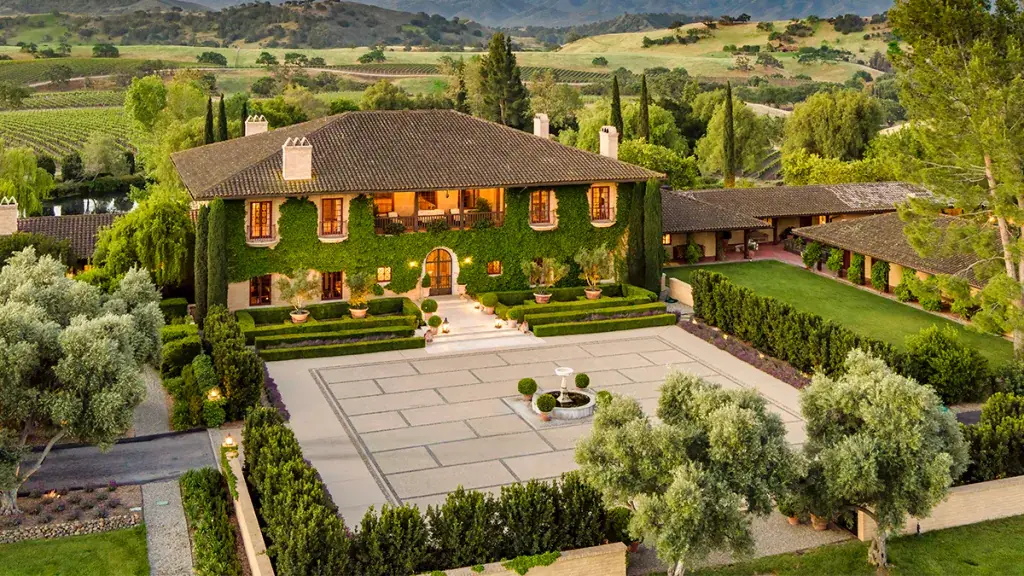
The pursuit of mastery in evaluating and managing estate lifestyle destinations usa properties requires looking past surface-level real estate listings and generic luxury marketing tropes. Instead, practitioners must master the complexities of water rights adjudication, soil chemistry, conservation easements, and multi-parcel legal titling. A common misconception treats large-scale rural land ownership as a passive investment or a casual weekend retreat where natural land management occurs without human intervention. Consequently, this ignores the complex biosecurity risks, invasive species eradication protocols, and county-mandated wildfire defensible space requirements that govern multi-acre landholdings. When sprawling properties are mismanaged, native pastures degrade, erosion destroys infrastructure, and property values suffer from deferred maintenance.
Oversimplification frequently stems from applying uniform property management templates across vastly different regional topographies and legal jurisdictions. While a modest agricultural exemption is easily maintained in certain southeastern counties, western water rights doctrines follow complex prior appropriation laws that dictate exact seasonal diversion limits. Furthermore, curating estate lifestyle destinations usa holdings demands rigorous coordination with state department of environmental protection guidelines, county zoning boards, and historical architectural review commissions. Many acquisitions fail because buyers neglect to calculate total infrastructure replacement costs, road maintenance obligations under private association agreements, and local property tax reassessment triggers upon structural renovation. Consequently, planners must integrate professional civil engineering assessments and comprehensive environmental audits directly into the acquisition blueprint.
Another layer of complexity involves harmonizing absolute personal privacy with community integration and regional economic participation. Because premier rural and semi-rural properties feature intricate equestrian facilities, working vineyards, private water impoundments, and extensive security perimeters, site planning must account for emergency vehicle access, wildlife migration corridors, and localized labor management. Therefore, evaluating effective multi-acre property strategies requires reconciling broad legacy aspirations with strict legal, environmental, and financial realities.
Deep Contextual Background
The evolution of large-scale residential landholdings across North America reflects broader shifts in industrial agriculture, demographic migration, wealth preservation models, and environmental consciousness. During the late nineteenth and early twentieth centuries, the American Gilded Age produced sprawling country estates concentrated primarily in the Hudson Valley, Newport, and coastal New England. These historic properties operated as aristocratic summer retreats supported by armies of domestic and agricultural labor, relying on primitive heating, manual water pumping, and heavy coal or wood energy consumption.
As twentieth-century suburbanization reshaped the American landscape, the middle decades witnessed a temporary decline in self-contained rural estates in favor of dense suburban developments and urban penthouses. However, the closing decades of the twentieth century and the early twenty-first century triggered a massive resurgence in rural land acquisition. High-net-worth individuals increasingly sought out agricultural enclaves, equestrian ranches, and historic wine country estates as safe-haven assets capable of offering personal sovereignty, food security, and profound psychological refuge from urban density.
Today, the elite property sector operates at the intersection of environmental conservation, advanced civil engineering, and generational wealth planning. Leading regions—such as the Hudson Valley in New York, the Texas Hill Country, the Central Coast of California, and the Blue Ridge foothills of Virginia—establish national benchmarks for sustainable land stewardship. This systemic shift transformed basic agricultural acreage into premier estate lifestyle destinations usa assets that balance historic heritage with modern ecological resilience.
Conceptual Frameworks and Mental Models
Evaluating and executing high-end rural and semi-rural property acquisitions benefits from structured analytical models isolating ecological, legal, and operational variables.
-
The Bioregional Water Security Index measures well yield stability, surface water rights seniority, and watershed health to guarantee long-term agricultural and residential hydration.
-
The Sovereign Privacy Matrix evaluates topographical shielding, acoustic buffer zones, and legal parcel consolidation to prevent future visual or auditory encroachment.
-
The Capital Asset Lifespan Model tracks depreciation and replacement cycles for heavy infrastructure, including private roads, bridges, dams, and multi-megawatt electrical substations.
-
The Agricultural Yield vs. Maintenance Ratio balances working land revenues against operational upkeep expenses to determine true carrying costs.
Key Categories or Variations
High-end multi-acre landholdings span several distinct structural classifications, each presenting specific trade-offs regarding operational complexity, capital requirements, and regional governance.
When professionals evaluate estate lifestyle destinations usa options, they must align property classifications with long-term legacy goals and risk tolerances. Historic country estates prioritize architectural magnificence and cultural permanence, whereas working agricultural ranches demand active management of livestock and soil health. Meanwhile, conservation-easement sanctuaries sacrifice development rights in exchange for permanent ecological preservation and significant tax advantages.
Detailed Real-World Scenarios
Understanding how premier rural properties perform under environmental and operational stress requires examining specific situational archetypes across diverse geographic environments.
The Hudson Valley Historic Estate Restoration
-
Operational Constraints: A multi-hundred-acre historic property in upstate New York required comprehensive infrastructure modernization while strictly complying with state historic preservation oversight.
-
Core Decision Points: The ownership group evaluated integrating modern closed-loop geothermal HVAC systems versus maintaining aging oil boilers across sprawling 19th-century stone structures.
-
Failure Modes: Attempting to run high-voltage electrical lines across sensitive archaeological zones without prior state review resulted in immediate stop-work orders and heavy fines.
-
Second-Order Effects: Partnering with historic preservation consultants to tunnel directional-boring utility lines beneath historical gardens preserved the landscape integrity while successfully installing modern, energy-efficient heating.
The Texas Hill Country Water Independence Project
-
Operational Constraints: A sprawling ranch in central Texas faced severe regional drought conditions, declining water table levels, and strict county well-permitting quotas.
-
Core Decision Points: Engineers designed a comprehensive rainwater harvesting system paired with massive underground storage cisterns and advanced ultraviolet filtration arrays.
-
Failure Modes: Relying entirely on a single shallow water well caused complete supply failure during peak summer heat waves when the local water table receded.
-
Second-Order Effects: The redundant rainwater catchment system provided pristine domestic water independence, buffering the property against municipal water restrictions and drought stress.
The California Coastal Vineyard Frost Protection Setup
-
Operational Constraints: A boutique wine estate in the Napa Valley required reliable frost protection for delicate varietal vines during sudden spring cold snaps.
-
Key Structural Solutions: The management team installed an automated overhead micro-sprinkler system tied to remote wireless thermal sensors distributed across lower vineyard blocks.
-
Failure Modes: Manual frost-monitoring patrols proved too slow to activate irrigation before ambient temperatures dropped below critical freezing thresholds.
-
Second-Order Effects: The automated thermal sensor grid triggered protective ice-encapsulation watering within seconds of freezing conditions, saving the entire annual grape harvest from frost necrosis.
The Blue Ridge Mountain Fire-Defensible Infrastructure
-
Operational Constraints: A secluded mountain estate in Virginia faced extreme wildfire risks due to dense surrounding timber growth and steep topographical slopes.
-
Core Decision Points: Technicians cleared a 200-foot defensible perimeter, installed non-combustible standing-seam metal roofing, and deployed a dedicated diesel-powered fire suppression pump drawing from a private pond.
-
Failure Modes: Overgrown native brush touching wooden structural siding created a direct ignition bridge during dry autumn wind events.
-
Second-Order Effects: The cleared defensible space and independent high-pressure water pump ensured the estate remained completely protected during regional wildfire emergencies without relying on municipal fire departments.
Planning, Cost, and Resource Dynamics
Executing elite multi-acre property management involves navigating complex financial structures extending far beyond basic purchase prices. Total operating budgets must account for heavy agricultural machinery, specialized land management labor, private road maintenance, security infrastructure, and ongoing environmental compliance.
The primary financial consideration in planning estate lifestyle destinations usa acquisitions involves balancing upfront capital outlays against long-term operational carrying costs. Attempting to reduce initial budgets by neglecting deferred infrastructure maintenance guarantees catastrophic equipment failure, road washouts, and exorbitant emergency repair bills. Stakeholders who prioritize long-term asset preservation allocate capital toward robust, commercial-grade infrastructure during the initial acquisition phase.
Tools, Strategies, and Support Systems
Navigating the execution of complex rural property management requires specialized heavy machinery, GIS mapping software, and environmental monitoring hardware.
-
Geographic Information Systems (GIS) Software maps property boundaries, elevation contours, timber stands, and subterranean utility lines with centimeter accuracy.
-
Commercial Tractor-Mounted Flail Mowers and Bush Hogs manage large-scale pasture brush clearance and wildfire fuel reduction.
-
Automated Weather and Soil Moisture Stations monitor micro-climate precipitation, wind speed, and root-zone hydration to optimize agricultural irrigation.
-
Industrial-Grade Chain Saws, Log Splitters, and Chipper Units process fallen timber and maintain clear timber-management firebreaks.
-
Starlink Satellite Internet and Mesh Wi-Fi Arrays maintain high-speed communication and security monitoring across remote multi-acre estates.
-
Heavy-Duty Utility Terrain Vehicles (UTVs) transport maintenance crews, tools, and materials across rugged, unpaved ranch topography.
Risk Landscape and Failure Modes
Even meticulously planned rural estates remain vulnerable to systemic environmental, legal, and operational failure modes over time.
-
Watershed Depletion and Well Failure: Over-extraction of regional groundwater tables can cause private wells to run dry during extended regional droughts.
-
Conservation Easement Violations: Unintentional construction or timber clearing within protected easement zones can trigger severe legal penalties and forced restoration orders.
-
Invasive Species Infestation: Aggressive non-native weeds and forest pests can decimate native pastures and timber stands if not managed proactively.
-
Infrastructure Isolation: Severe winter storms or fallen timber can sever private access roads, trapping residents and emergency vehicles for days.
Governance, Maintenance, and Long-Term Adaptation
Maintaining elite operational standards across rural and agricultural landholdings requires disciplined operational governance and ongoing seasonal review cycles. Environmental regulations, tax laws, and regional climate patterns gradually alter land management obligations and water rights availability. Therefore, property stewards and estate managers must adhere to formal inspection protocols. Annual well-yield audits, bridge structural reviews, boundary fence patrols, and timber health assessments preserve long-term asset integrity.
This proactive governance model ensures that eroding culverts, failing water pumps, or encroaching invasive species are managed before compromising property value. Regular reviews of agricultural exemption compliance and conservation easement stipulations prevent legal liabilities from disrupting estate operations.
Measurement, Tracking, and Evaluation
Assessing the ongoing success of an estate lifestyle destinations usa holding involves monitoring objective ecological and financial metrics alongside qualitative lifestyle satisfaction indicators.
-
Leading Indicators: Verified well-yield stability logs, approved agricultural tax exemption renewal records, and proactive timber-management fuel reduction schedules.
-
Lagging Indicators: Zero structural washouts during major storm events, pristine conservation easement audit records, and reliable long-term machinery uptime.
-
Qualitative Signals: Exceptional biodiversity recovery within protected land zones, seamless daily privacy and acoustic tranquility, and effortless multi-generational family usability.
Common Misconceptions and Oversimplifications
-
Myth: Acquiring estate lifestyle destinations usa properties simply requires sufficient financial capital to purchase large tracts of rural land without prior management experience. Correction: Managing multi-acre properties demands deep operational knowledge of soil science, water rights law, heavy equipment operation, and local labor management.
-
Myth: Agricultural tax exemptions are granted automatically upon purchasing rural land and require no active land management. Correction: Counties enforce strict minimum agricultural production quotas and annual revenue reporting to maintain preferential tax statuses.
-
Myth: Private wells and septic systems require minimal maintenance compared to municipal utility connections. Correction: Private wells and advanced septic nitrification systems demand continuous water testing, filter replacements, and mechanical pump servicing.
-
Myth: Conservation easements permanently freeze a property in time without requiring active ecological stewardship. Correction: Easements often mandate active habitat restoration, invasive species removal, and professional forestry management plans enforced by land trusts.
Ethical, Practical, and Contextual Considerations
Beyond pure personal enjoyment and capital preservation, responsible estate land stewardship respects regional watershed health, indigenous cultural history, wildlife migration corridors, and neighboring rural communities. Excessive water extraction or careless land clearing can disrupt shared regional water tables and degrade local ecosystems. Therefore, professional planning mandates implementing regenerative agricultural practices, wildlife-friendly fencing, and sustainable timber management. Furthermore, engaging constructively with local rural communities ensures that expansive private landholdings contribute positively to regional economic and ecological vitality.
Conclusion
The successful planning, acquisition, and management of elite multi-acre properties require careful adherence to the standards defining estate lifestyle destinations usa holdings. True long-term asset value is achieved not through hasty land accumulation or superficial cosmetic renovations, but through rigorous adherence to water rights security, conservation compliance, heavy infrastructure maintenance, and professional ecological stewardship. By evaluating landownership through comprehensive technical frameworks, stewards establish permanent, resilient, and refined rural environments that stand the test of time.