How to Reduce Landscape Lighting Costs: Expert Guide
The architectural nightscape of contemporary residential and commercial properties requires far more than rudimentary outdoor electrical conservation. Modern exterior planning demands a sophisticated discipline of electrical engineering, optical efficiency, and long-term financial lifecycle management. Property managers and estate owners view outdoor illumination as a major operational expense that requires rigorous optimization without compromising structural security or aesthetic integrity. Furthermore, they demand precise wattage regulation, component longevity, and smart-home scheduling integration.
Executing durable low-voltage electrical infrastructure across intricate property boundaries requires navigating strict technical parameters to minimize energy waste. Specifically, voltage drop calculations across long wire runs dictate transformer sizing and cable gauge selection, preventing resistive power loss that quietly inflates utility bills. Meanwhile, dark-sky compliance mandates protect nocturnal ecosystems while reducing light pollution overhead. Without rigorous photometric planning and efficient LED driver selection, ambitious illumination projects suffer from rapid component degradation and inflated operational expenditures.
Achieving optimal results requires balancing initial capital outlays against long-term operational savings and maintenance realities. Every single component—from toroidal core multi-tap transformers to marine-grade brass fixture housings—determines structural and electrical longevity. Therefore, this comprehensive reference manual provides an exhaustive examination of the structural, electrical, and financial dimensions shaping modern architectural exterior illumination and financial efficiency.
Understanding “how to reduce landscape lighting costs”
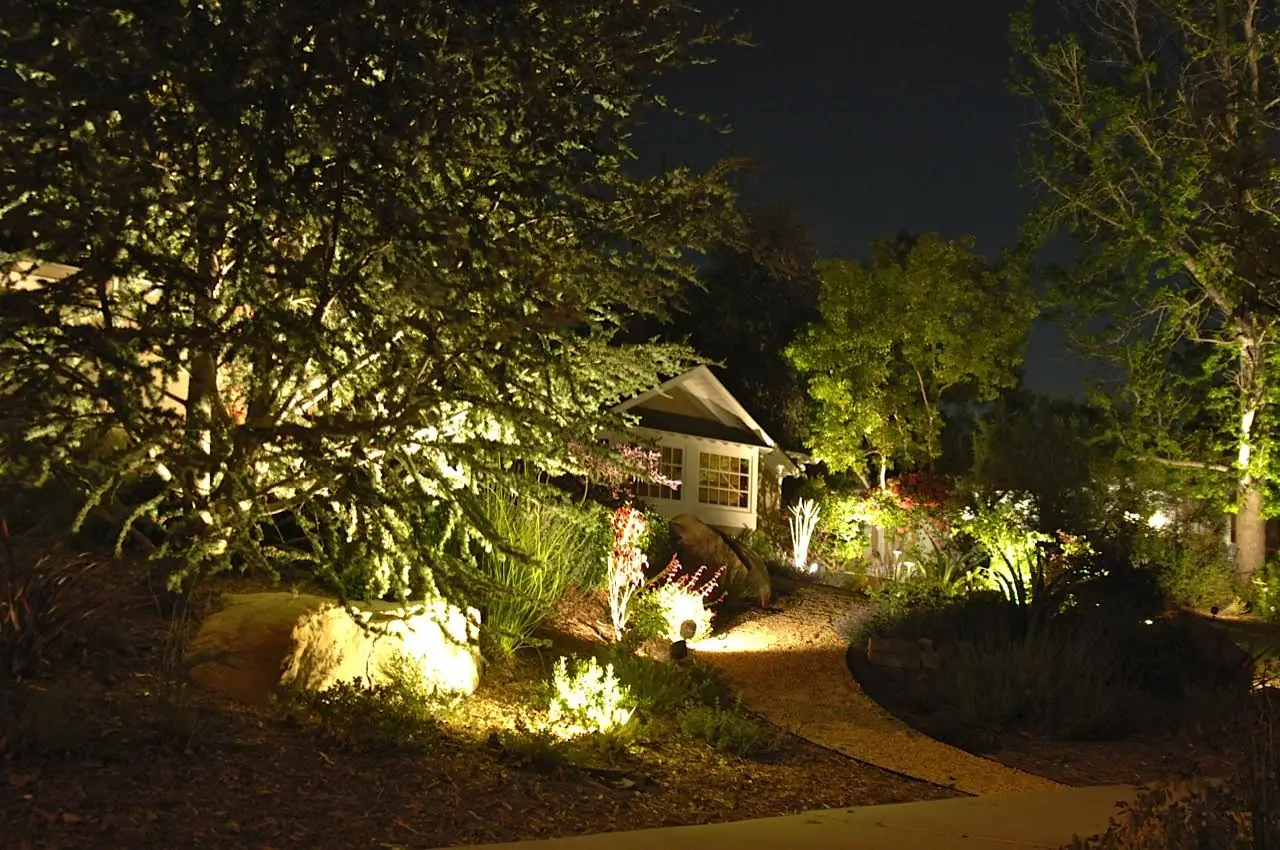
The pursuit of mastery in how to reduce landscape lighting costs requires looking past surface-level energy conservation tips. Instead, practitioners must master the physics of luminous efficacy, circuit resistance, and transformer load efficiency. A common misconception treats residential outdoor lighting expenditure as an unavoidable fixed utility overhead. Consequently, this ignores the complex electrical load calculations and optical design choices required to prevent excessive power draw, premature driver burnout, and frequent fixture replacement cycles. When systems are improperly balanced, wasted wattage compounds silently over years of continuous operation.
Oversimplification frequently stems from applying uniform energy reduction templates across diverse property topologies. While installing lower-wattage lamps suffices for a modest garden path, sprawling commercial estates require zone-based scheduling, motion-activated dimming, and precise optical reflectors to maximize lumen output per watt. Furthermore, implementing strategies on how to reduce landscape lighting costs demands rigorous coordination with municipal electrical codes and transformer tap tuning. Many installations operate at elevated voltages due to short wire runs, accelerating diode degradation. Consequently, planners must integrate multi-tap transformers and precise optical cutoffs directly into the layout.
Another layer of complexity involves harmonizing financial frugality with human psychological comfort and functional safety illumination. Because modern parcels feature intricate pathways, level changes, and water features, site planning must account for strategic dark zones rather than blanket illumination. Therefore, evaluating effective cost-reduction strategies requires reconciling broad architectural visions with strict electrical and fiscal realities.
Deep Contextual Background
The evolution of residential and commercial exterior illumination reflects broader shifts in semiconductor technology, electrical engineering, and economic optimization. During the mid-twentieth century, outdoor lighting was largely primitive and expensive to operate. Master plans favored high-voltage 120-volt incandescent floodlights mounted directly onto exterior walls. These systems consumed massive amounts of electricity, generated extreme heat, and burned out rapidly, driving up replacement and utility overhead.
As the lighting industry transitioned to low-voltage 12-volt halogen systems in the late twentieth century, optical control improved, but energy consumption remained stubbornly high. Halogen lamps drew significant amperage, forcing property owners to install large transformers and heavy wire networks that escalated upfront and ongoing costs. The subsequent arrival of solid-state light-emitting diode technology revolutionized the economic landscape entirely. LEDs provided unprecedented luminous efficacy, drastically cutting wattage demands while extending operational lifespans from thousands to tens of thousands of hours.
Today, the industry operates at the intersection of electrical engineering, smart-home automation, and lifecycle cost modeling. Modern design firms utilize advanced digital simulation tools to optimize fixture placement, ensuring maximum visual impact with the absolute minimum electrical load. This systemic shift transformed basic backyard security lighting into a highly disciplined science of energy management and cost reduction.
Conceptual Frameworks and Mental Models
Evaluating and executing cost-reduction strategies for exterior lighting projects benefits from structured analytical models isolating electrical, optical, and financial variables.
-
The Total Cost of Ownership (TCO) Vector calculates initial capital expenditure, cumulative electricity consumption, and replacement frequency over a ten-year horizon.
-
The Luminous Efficacy Matrix evaluates lumens delivered per watt consumed to identify inefficient fixtures draining power without adding visual value.
-
The Voltage Regulation Index tracks transformer tap settings to ensure lamps operate precisely at their rated voltage, preventing premature burnout from over-voltage conditions.
-
The Zone-Based Occupancy Model correlates operational runtime with human traffic patterns, ensuring lights remain dimmed or deactivated during unoccupied hours.
Key Categories or Variations
Architectural exterior illumination strategies span several distinct structural classifications. Each presents specific trade-offs regarding upfront capital investment, energy savings, and installation complexity.
| Cost-Reduction Category | Primary Technical Approach | Core Financial Advantage | Key Operational Trade-Off |
| Tier 1: Solid-State LED Retrofitting | Replacing legacy halogen bulbs with high-efficacy LED modules | Reduces electrical wattage draw by up to 85 percent instantly. | Initial purchase cost of quality LED retrofit lamps; driver compatibility issues. |
| Tier 2: Astronomical Timing & Zoning | Integrating smart astronomical timers and multi-zone controllers | Eliminates waste by automating dusk-to-dawn schedules and dimming unused areas. | Requires complex programming and reliable Wi-Fi or cellular signal connectivity. |
| Tier 3: Optical Reflector Optimization | Utilizing narrow beam angles and precision cowls | Directs 100 percent of light flux onto target surfaces, allowing lower wattage lamps. | Demands meticulous aiming precision during installation and seasonal adjustments. |
| Tier 4: Voltage Drop Balancing | Tuning multi-tap magnetic transformers to exact line requirements | Prevents over-voltage stress that destroys delicate LED drivers prematurely. | Requires professional True-RMS multimeter testing and electrical expertise. |
When property owners evaluate how to reduce landscape lighting costs, they must align strategy selections with site-specific scale and equipment age. LED retrofitting offers immediate electrical savings, but demands careful attention to driver compatibility. Conversely, astronomical timing and zoning automation eliminate wasted runtime during late-night hours, though they require initial programming investment. Meanwhile, optical reflector optimization allows designers to achieve higher perceived brightness using lower-wattage lamps.
Detailed Real-World Scenarios
Understanding how exterior cost-reduction strategies perform under environmental stress requires examining specific situational archetypes across diverse residential environments.
The Commercial Estate Halogen-to-LED Conversion
-
Operational Constraints: A sprawling commercial corporate campus featured 120 legacy 50-watt halogen up-lights running ten hours per night, generating unsustainable monthly utility bills and constant burnout maintenance calls.
-
Core Decision Points: Facilities management evaluated the capital expense of a complete system overhaul versus retrofitting existing brass housings with 7-watt professional LED modules.
-
Failure Modes: Purchasing cheap retail LED lamps led to severe color inconsistency and rapid driver failure under commercial operating conditions.
-
Second-Order Effects: Installing commercial-grade 2700K LED modules slashed total circuit wattage from 6,000 watts to 840 watts, recouping the entire capital investment within fourteen months through electricity savings.
The Residential Astronomical Timer Retrofit
-
Operational Constraints: A large residential estate relied on traditional mechanical photocells that frequently malfunctioned, leaving exterior lights burning throughout daylight hours.
-
Core Decision Points: Technicians installed a centralized smart astronomical timer integrated with multi-zone magnetic transformers.
-
Failure Modes: Relying on basic photocells without time-of-night scheduling caused unnecessary overnight illumination when the property was entirely unoccupied.
-
Second-Order Effects: The astronomical controller automated dusk-on and midnight-off schedules for decorative zones while maintaining security lighting, cutting cumulative annual runtime by 40 percent.
The Over-Voltage Transformer Correction
-
Operational Constraints: A suburban property experienced a high rate of LED lamp failures despite purchasing premium fixtures, leading to excessive replacement labor costs.
-
Key Structural Solutions: Electricians measured terminal voltage and discovered that a 12-volt tap on a short wire run was delivering 14.2 volts to the fixtures.
-
Failure Modes: Ignoring over-voltage conditions accelerates semiconductor thermal breakdown, neutralizing the expected lifespan benefits of LED technology.
-
Second-Order Effects: Re-tapping the magnetic transformer down to the 11-volt setting normalized operating voltage, stopping premature lamp failures and eliminating recurring replacement expenses.
The Zoned Architectural Reduction
-
Operational Constraints: A luxury hospitality property illuminated its entire perimeter gardens uniformly all night, inflating energy consumption and violating regional dark-sky ordinances.
-
Core Decision Points: Designers re-zoned the wiring layout to separate perimeter security lighting from interior guest pathway and patio accent zones.
-
Failure Modes: Blanket illumination of non-critical landscape features wasted energy and caused light trespass complaints from neighboring parcels.
-
Second-Order Effects: Implementing tiered zoning allowed staff to dim decorative tree and facade up-lights by 50 percent at midnight while keeping functional path safety lighting active, significantly reducing power draw.
Planning, Cost, and Resource Dynamics
Executing elite exterior lighting cost-reduction projects involves navigating complex financial structures extending far beyond basic bulb price comparisons. Total project expenditures must account for high-efficiency magnetic transformers, commercial-grade LED modules, smart automation controllers, and professional electrical labor.
| Financial Variable | Average Baseline Range | Primary Cost Drivers & Variability |
| Commercial-Grade LED Retrofit Modules | $25.00 to $90.00 per lamp | Lumen output, CRI rating, driver build quality, thermal management. |
| Smart Astronomical Timers & Controllers | $200 to $900 per unit | Zone capacity, Wi-Fi connectivity, app integration, commercial durability. |
| Multi-Tap Magnetic Transformers | $400 to $2,000+ per unit | Total wattage capacity (300W to 900W), core efficiency, tap voltage options. |
| Professional Energy Audit & Tuning | $500 to $2,500 project total | Property scale, True-RMS electrical testing, photometric analysis labor. |
The primary financial consideration in planning how to reduce landscape lighting costs involves the trade-off between upfront capital outlay and long-term utility savings. Attempting to minimize initial budgets by purchasing low-cost consumer LED lamps guarantees rapid failure rates and higher long-term maintenance overhead. Stakeholders who prioritize true fiscal efficiency allocate capital toward commercial-grade components and precise electrical tuning during the optimization phase.
Tools, Strategies, and Support Systems
Navigating the execution of complex landscape lighting energy audits and system modernizations requires specialized electrical testing hardware and automation software.
-
Digital True-RMS Multimeters measure operating voltage at socket terminals to verify that voltage drop and over-voltage conditions remain within safe limits.
-
Clamp Meters measure total circuit amperage draw in real-time, allowing electricians to calculate exact wattage consumption against transformer capacity.
-
Photometric Light Meters measure foot-candles on target surfaces to verify whether existing illumination levels exceed functional requirements.
-
Smart-Home Automation Apps configure precise astronomical schedules, dimming percentages, and zone-based operational calendars.
-
Infrared Thermal Imaging Cameras detect overheating wire splices, overloaded transformers, and failing LED driver heat sinks.
-
Professional Wire Strippers and Heat-Shrink Connectors ensure zero-resistance electrical connections that prevent resistive power loss.
Risk Landscape and Failure Modes
Even meticulously planned landscape lighting cost-reduction strategies remain vulnerable to systemic technical, environmental, and electrical failure modes over time.
-
Premature Diode Thermal Degradation: Operating LED lamps in unventilated or poorly heat-sunk fixtures causes internal temperatures to spike, shortening operational life.
-
Transformer Core Hum and Inefficiency: Utilizing cheap electronic transformers instead of toroidal magnetic cores leads to high electrical noise, power loss, and premature failure.
-
Voltage Mismatch Failures: Failing to adjust transformer taps to match actual wire run resistance results in either under-voltage dimming or over-voltage burnout.
-
Automation Control Lockouts: Relying entirely on cloud-based smart controllers can leave systems unmanageable during internet service outages or server deprecation.
Governance, Maintenance, and Long-Term Adaptation
Maintaining elite financial efficiency across exterior lighting installations requires disciplined operational governance and ongoing seasonal review cycles. Plant growth, architectural modifications, and seasonal time shifts gradually alter lighting requirements and energy usage patterns. Therefore, property managers and facility directors must adhere to formal inspection protocols. Annual energy consumption audits, transformer tap checks, and timer schedule recalibrations preserve long-term fiscal performance.
This proactive governance model ensures that inefficient runtime schedules or failing components are identified and corrected before inflating utility expenses. Regular checks of automated controllers and fixture alignments prevent environmental stress from disrupting system efficiency.
Measurement, Tracking, and Evaluation
Assessing the ongoing success of an exterior lighting cost-reduction initiative involves monitoring objective electrical metrics alongside qualitative system performance indicators.
-
Leading Indicators: Verified wattage reduction logs per circuit, precise terminal voltage test records (11.0V to 11.5V), and optimized astronomical timer programming schedules.
-
Lagging Indicators: Measurable monthly utility bill decreases, zero premature LED lamp replacements, and stable multi-tap transformer operating temperatures.
-
Qualitative Signals: Balanced nocturnal aesthetic presentation, absence of blinding glare, and seamless automation responsiveness across all property zones.
Common Misconceptions and Oversimplifications
-
Myth: Leaving landscape lighting running 24 hours a day provides better security and deters intruders more effectively. Correction: Continuous daytime and all-night illumination wastes massive amounts of electricity, degrades lamp lifespans rapidly, and signals an unattended property.
-
Myth: Any cheap retail LED bulb can be used to replace halogen lamps in existing exterior fixtures to cut costs. Correction: Incompatible drivers and poor thermal management in cheap LEDs cause rapid flickering, color shifting, and premature burnout.
-
Myth: Lowering electricity costs requires turning off all decorative accent lighting permanently. Correction: Strategic zoning, precision optics, and smart dimming allow full aesthetic enjoyment while reducing energy draw by over 70 percent.
-
Myth: Solar-powered landscape lights offer a maintenance-free and cost-effective alternative to low-voltage wired systems. Correction: Consumer solar fixtures suffer from weak battery storage, unreliable winter charging, and short component lifespans that require frequent total replacement.
Ethical, Practical, and Contextual Considerations
Beyond pure financial savings and energy conservation, responsible landscape lighting optimization respects municipal dark-sky initiatives, nocturnal wildlife habitats, and neighboring property privacy. Excessive, unshielded illumination wastes energy while disrupting local ecosystems and contributing to urban sky glow. Therefore, professional cost-reduction mandates utilizing fully shielded 2700K warm-spectrum fixtures directed strictly downward. Furthermore, incorporating motion sensors and astronomical zoning timers ensures energy is expended only when functionally necessary.
Conclusion
The successful planning, engineering, and execution of elite exterior illumination cost-reduction strategies require careful adherence to how to reduce landscape lighting costs principles. True long-term fiscal efficiency is achieved not through haphazard deactivation, but through rigorous LED retrofitting, precision voltage tuning, and intelligent zone-based scheduling. By evaluating energy choices through comprehensive technical frameworks, property owners establish permanent, highly efficient, and refined nighttime environments that optimize operational expenditures over decades.