Modern Architectural Lifestyle Destinations USA: Expert Guide
The convergence of cutting-edge structural engineering, intentional urban planning, and experimental domestic design has shaped a distinct geography across North America. When cultural analysts, preservationists, and design enthusiasts evaluate premier modern architectural lifestyle destinations usa, they examine complex regional enclaves where residential living, public art, and geography merge seamlessly. These environments are not passive clusters of photogenic buildings; they function as active laboratories of spatial philosophy, reflecting shifting socio-economic paradigms, regional industrial histories, and evolving environmental philosophies over the past century.
Analyzing these dynamic cultural hubs requires moving past superficial tourist observations to explore the underlying material culture, structural engineering feats, and preservation challenges that keep them intact. From desert utopian enclaves anchored by mid-century steel-and-glass pavilions to dense urban experimental housing districts, modern American design ecosystems encompass profound spatial contradictions. A site protected for its raw modernist purity often bears the friction of intensive tourism, climate change vulnerabilities, and restrictive zoning regulations, demanding rigorous critical analysis from visitors and urban planners alike.
This reference manual provides an exhaustive structural, historical, and operational framework for analyzing, interpreting, and experiencing the nation’s premier design-forward enclaves. The following sections dissect systemic historic evolution, analytical mental models, preservation economics, and long-term governance methodologies. Through rigorous examination of material decay vectors, site planning ethics, and heritage management, this guide establishes a definitive technical and editorial standard for the study of modern architectural lifestyle destinations across the United States.
Understanding “modern architectural lifestyle destinations usa”
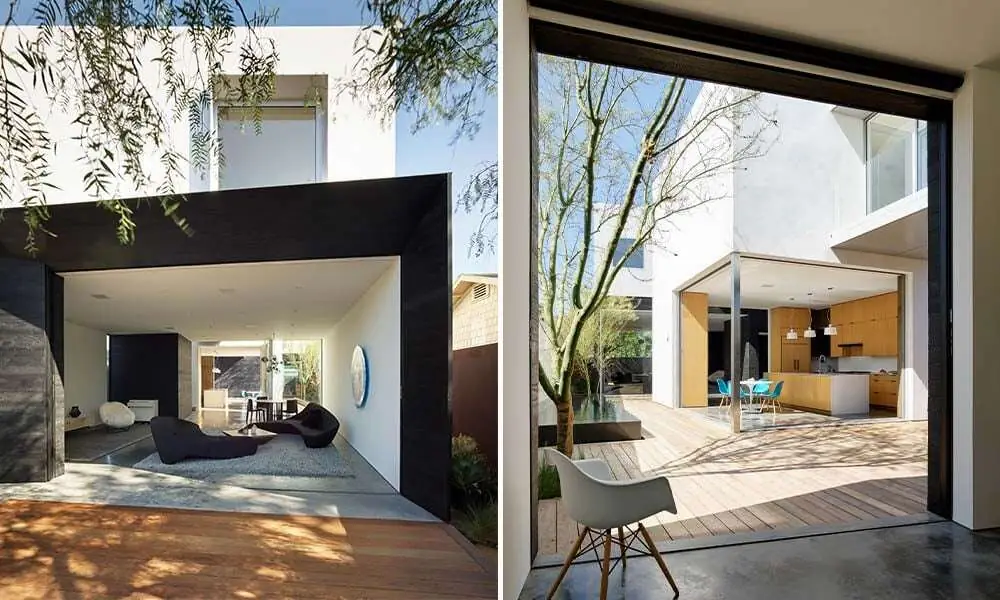
When researchers investigate modern architectural lifestyle destinations usa, the primary objective is decoding how human structures shape, and are shaped by, regional topography and social aspirations over long temporal horizons. A common pitfall involves treating these enclaves as static outdoor museums frozen in time, ignoring the dynamic ecological shifts, material weathering processes, and continuous human habitation patterns that alter their physical reality daily.
A widespread misconception views design-forward lifestyle destinations through a purely aesthetic lens, reducing complex structural engineering achievements and utopian urban planning to picturesque backdrops for leisure. This oversimplification ignores the socio-political power dynamics, labor histories, and environmental costs embedded within monumental concrete structures, steel framing systems, and experimental community layouts. In reality, mastering how to interpret modern architectural lifestyle destinations usa requires examining the friction between historical preservation integrity and modern commercial hospitality pressures.
Relying on romanticized, uncritical narratives introduces severe intellectual vulnerabilities. When site interpreters gloss over structural failures, housing affordability crises, or ecological degradation associated with master-planned architectural enclaves, the resulting public understanding remains incomplete. True professional analysis demands rigorous historical context, structural autopsy, and an honest accounting of how these lifestyle hubs continue to evolve under contemporary environmental and economic pressures.
Deep Contextual Background
The evolution of modern architectural lifestyle enclaves in North America reflects a long, contested continuum of spatial transformation spanning early industrial utopian experiments, post-war suburban mass-customization, and contemporary eco-modernist developments. Early structural interventions were dictated by regional climate adaptation and industrial material innovations, resulting in expansive steel framing, plate glass walls, and open-plan spatial layouts that responded directly to post-war optimism and changing domestic lifestyles.
The mid-twentieth century marked a major industrial and philosophical turning point. The rise of experimental residential programs, championed by visionary patrons and architects in regions like Southern California and the Pacific Northwest, reframed domestic spaces not as traditional enclosed shelters, but as fluid indoor-outdoor environments designed to promote civic ease and psychological well-being. Simultaneously, industrial production provided lightweight structural steel, prefabricated panels, and laminated woods that freed architects from load-bearing wall constraints.
In subsequent decades, the expansion of these enclaves transformed niche architectural experiments into highly sought-after cultural lifestyle destinations. Consequently, studying modern architectural lifestyle destinations usa evolved from a niche antiquarian pastime into an interdisciplinary academic and professional field encompassing structural conservation, real estate economics, cultural resource management, and regional tourism planning.
Conceptual Frameworks and Mental Models
Analyzing complex architectural lifestyle environments requires robust mental models that account for material aging, spatial hierarchy, and cultural layering.
The Spatial Continuity Horizon
This foundational model views modern architectural hubs as continuous fluid systems where indoor living areas bleed directly into exterior courtyards and natural topography. It prevents analysts from isolating a single interior room, forcing them to evaluate whole-site spatial flow.
The Material Vulnerability Matrix
Modernist architecture relies on unadorned, experimental materials such as exposed steel, thin concrete slabs, and expansive glass curtain walls. This mental model evaluates buildings based on their high exposure to weathering, thermal cycling, and structural degradation vectors.
The Tourist Carrying-Capacity Gradient
Every design destination has a finite physical and structural threshold. This framework measures the wear and tear imposed by architectural tourism against the regenerative capacity of local infrastructure and historic building fabrics.
The Utopian-Commercial Dualism
Many lifestyle destinations transition from radical, anti-establishment architectural experiments into exclusive, high-cost luxury enclaves. This model tracks the ideological and economic shifts required to commercialize avant-garde housing.
Key Categories and Architectural Variations
Mastering the study of modern architectural lifestyle destinations usa involves navigating distinct typologies, each carrying specific preservation challenges and interpretive frameworks.
Desert Utopian Enclaves
Encompassing low-profile steel-and-glass residential compounds integrated into arid mountain or valley floor landscapes across the American Southwest.
-
Trade-Offs: Unmatched spatial indoor-outdoor integration and striking visual contrast, but highly vulnerable to extreme solar radiation, thermal expansion, and HVAC strain.
Coastal Modernist Communities
Featuring cantilevered timber and concrete structures perched precariously on dramatic ocean bluffs or nestled within coastal dune ecosystems.
-
Trade-Offs: Breathtaking marine vistas and innovative structural engineering, but presents severe salt-fog corrosion, wood rot, and coastal erosion risks.
Urban Industrial Adaptive Reuse Districts
Comprising converted warehouses, former manufacturing plants, and integrated live-work districts that anchor modern creative class lifestyles.
-
Trade-Offs: Vibrant urban density and rich historic industrial character, but requires complex environmental remediation and seismic retrofitting.
Suburban Mid-Century Master-Planned Villages
Sprawling residential neighborhoods featuring post-war mass-customized post-and-beam homes sharing integrated community green spaces.
-
Trade-Offs: Exceptional egalitarian design heritage and neighborhood cohesion, but battles against unsympathetic architectural remodels and teardowns.
Architectural Comparison Table
| Lifestyle Destination Category | Primary Structural Material | Main Preservation Vulnerability | Interpretive Challenge | Primary Management Priority |
| Desert Utopian Enclaves | Steel, glass, slump block | UV degradation, thermal shock | Preserving raw material finishes | Climate control & envelope sealing |
| Coastal Modernist Communities | Reinforced concrete, timber | Salt-fog corrosion, foundation slip | Balancing private access and views | Structural stabilization against erosion |
| Urban Adaptive Reuse | Cast iron, heavy brick, steel | Seismic vulnerability, moisture ingress | Honoring industrial labor history | Code compliance & seismic retrofitting |
| Suburban Mid-Century Tracts | Post-and-beam wood framing | Roof deflection, unpermitted remodels | Maintaining tract architectural integrity | Historic district design guidelines |
Realistic Decision Logic
When heritage managers and municipal planners evaluate modern architectural lifestyle destinations usa for public tourism expansion, decision logic must balance visitor economic impact against physical preservation integrity. If an iconic mid-century residential enclave experiences overwhelming daily foot traffic from architectural tourists, the resulting street congestion and property trespassing degrade the quiet lifestyle qualities that made the destination famous in the first place. Planners must weigh the cost of managed shuttle systems and restricted tour permits against the deterioration of neighborhood social fabric and private property rights.
Detailed Real-World Scenarios
Examining practical heritage management scenarios illustrates how mastering the analysis of modern architectural lifestyle destinations usa prevents structural degradation and community erosion across diverse public and private enclaves.
Case Study A: The Palm Springs Desert Compound Restoration
Conservation architects addressed severe structural steel rust-jacking and plate glass delamination in a famous 1950s post-and-beam residence located in the Coachella Valley.
-
Constraints: Extreme summer ambient temperatures exceeding 115 degrees Fahrenheit; intense solar ultraviolet exposure; strict historic preservation guidelines.
-
Decision Points: Management evaluated whether to replace original rusted structural steel framing with modern coated alloys or painstakingly sandblast and cathodically protect existing original members.
-
Failure Modes Identified: Decades of deferred maintenance and minor roof leaks allowed desert humidity and rare rain events to penetrate hidden steel channels, causing rust expansion that cracked surrounding concrete floor plates.
-
Second-Order Effects: The expanding steel shifted the expansive floor-to-ceiling glass assemblies, causing spontaneous glass thermal fracturing.
-
Resolution: Conservation teams temporarily shored up the roof plates, injected epoxy grouts into damaged concrete channels, treated steel members with rust-inhibiting primers, and installed UV-filtering laminated safety glass.
Field Incident B: The Sea Ranch Coastal Timber Preservation
Property managers in a celebrated modernist coastal enclave in Northern California managed the accelerated weathering of unpainted redwood siding and structural timber frames exposed to maritime gales.
-
Constraints: High-velocity salt spray; severe wind-driven rain; strict environmental covenants protecting native coastal grasslands.
-
Decision Points: Engineers assessed whether to apply modern synthetic clear sealants to preserve the golden wood color or allow natural weathering to silver-gray.
-
Failure Modes Identified: Salt-laden moisture trapped beneath failing clear polyurethane coatings caused localized fungal staining and wood fiber breakdown.
-
Second-Order Effects: Rot compromised structural bolt connections in exposed exterior cantilever brackets, threatening deck stability.
-
Resolution: Crews stripped incompatible sealants, replaced compromised timber members with locally sourced old-growth redwood treated with breathable natural oils, and upgraded stainless steel fastening hardware.
Operational Deployment C: The Columbus Indiana Architectural Tourism Integration
Civic leaders managed the expansion of public architectural tours across a Midwestern industrial town celebrated for its modernist public and commercial buildings.
-
Constraints: Active working municipal infrastructure; small-town residential privacy concerns; aging mid-century concrete and steel public structures.
-
Decision Points: Planners evaluated whether to route heavy tour bus traffic directly through residential neighborhoods or establish a centralized visitor hub with pedestrian-only tour loops.
-
Failure Modes Identified: Uncontrolled tour buses caused severe traffic congestion on narrow residential streets and accelerated asphalt wear around key architectural sites.
-
Second-Order Effects: Local residents grew hostile toward tourism initiatives, threatening community support for heritage preservation funding.
-
Resolution: The city established a dedicated electric shuttle program, created structured pedestrian audio tours, and coordinated tour schedules with local civic calendars to balance community needs with visitor access.
Planning, Cost, and Resource Dynamics
Administering an effective conservation and management strategy for modern architectural lifestyle enclaves requires understanding the economic relationship between specialized restoration craftsmanship, real estate valuation, and tourism infrastructure.
Direct and Indirect Financial Realities
When analyzing modern architectural lifestyle destinations usa, project planners must weigh the high upfront cost of master preservation architects and specialized material fabricators against the catastrophic loss of historical asset value. Relying on generic commercial contractors to repair custom mid-century steel profiles or cantilevered concrete decks invariably compromises structural authenticity.
Opportunity Cost and Resource Allocation
Community administrators must balance tourist access capacity against residential privacy and infrastructure wear. Admitting high volumes of unmanaged visitors generates immediate hospitality revenue but accelerates municipal maintenance liabilities, parking congestion, and local housing cost inflation.
Financial and Resource Allocation Range Table
| Preservation or Management Activity | Typical Cost Scale | Labor Requirement | Structural Longevity | Economic Impact |
| Routine Envelope & Sealant Audit | Low to Moderate | Low (In-house maintenance crew) | Immediate preventative value | High ROI on damage prevention |
| Custom Steel & Glass Restoration | High | Specialized metal fabricators | 25 – 40 years | Protects architectural authenticity |
| Seismic Retrofit & Foundation Tie | High to Ultra-High | Structural engineering crew | Long-term structural safety | Essential for high-risk seismic zones |
| Visitor Management Infrastructure | Moderate initial capital | Municipal transit crews | 10 – 20 years | Balances tourism and community peace |
Tools, Strategies, and Support Systems
Executing precise conservation and documentation of modern architectural lifestyle environments requires specialized diagnostic instruments, digital modeling systems, and archival support frameworks.
1. Terrestrial Laser Scanners (LiDAR)
Conservationists use high-resolution laser scanners to create millimeter-accurate 3D point clouds of complex modernist geometries and sagging cantilever structures, tracking structural movement over time.
2. Thermographic Infrared Cameras
Detecting hidden moisture pockets behind flat roof membranes, failing radiant floor heating lines, and thermal bridging within steel frame assemblies without destructive demolition.
3. Non-Destructive Sonic Pulse Velocity Meters
Testing the internal integrity of aging reinforced concrete columns and cantilevered slabs by measuring how fast sound waves travel through the material matrix.
4. Geographic Information Systems (GIS)
Mapping spatial relationships, historic district boundaries, zoning overlays, and visitor circulation networks across sprawling architectural enclaves.
5. Historic American Buildings Survey (HABS) Standards
Adhering to rigorous federal architectural documentation protocols, including large-format archival photography, measured ink drawings, and written historical narratives.
6. Specialized Epoxy Resin Injection Systems
Formulating breathable, low-viscosity structural epoxies that penetrate micro-cracks in aged architectural concrete without causing further chemical degradation.
Risk Landscape and Failure Modes
Failing to properly manage the preservation and visitor dynamics of modern architectural lifestyle enclaves exposes sites to compounding physical, environmental, and cultural risk factors.
Accelerated Flat Roof Moisture Infiltration
Mid-century architectural designs frequently feature low-pitch or zero-pitch flat roofs with internal drainage systems; blocked roof drains cause standing water that breaches failing waterproof membranes, destroying interior wood finishes.
Anthropogenic Over-Visitation and Asset Degradation
Uncontrolled architectural tourism results in excessive indoor foot traffic, wall touching, and surface wear that accelerates the deterioration of delicate interior finishes, original fabrics, and custom built-in millwork.
Deferred Maintenance and Structural Fatigue
Ignoring minor steel corrosion or hairline concrete spalling allows moisture to reach internal reinforcing elements, leading to sudden, expensive structural failures in cantilevered balconies and overhangs.
Governance, Maintenance, and Long-Term Adaptation
Administering long-term control over design-forward architectural destinations requires disciplined operational reviews, seasonal protocols, and systematic tracking checklists.
-
Biannual Roof and Drainage Audits: Inspect flat roof membranes, scuppers, internal downspouts, and flashing every spring and autumn to prevent destructive water accumulation.
-
Sealing and Envelope Maintenance: Clear vegetative overgrowth, inspect window and door weatherstripping, and verify exterior coating integrity semiannually.
-
Layered Maintenance Checklist:
-
Inspect structural steel connections for active corrosion and rust-jacking.
-
Verify integrity of sliding glass door tracks and weatherstripping seals.
-
Evaluate cantilevered concrete balconies for hairline cracking and efflorescence.
-
Review laser-scan monitoring points for any signs of foundation settling or structural deflection.
-
Measurement, Tracking, and Evaluation
Assessing the ongoing preservation success and structural health of modern architectural lifestyle destinations usa involves monitoring both qualitative and quantitative indicators.
Leading and Lagging Indicators
Leading indicators include stable moisture meter readings in flat roof assemblies, zero movement on crack-monitoring gauges, well-maintained municipal zoning buffers, and positive community feedback surveys. Conversely, lagging indicators reflect management failures, such as visible concrete spalling, severe tourist-induced housing displacement, structural timber rot, and emergency stabilization costs.
Common Misconceptions and Oversimplifications
1. Modernist architecture requires less maintenance because of its clean, unornamented lines.
Exposed steel, expansive glass, and flat roofs require rigorous, continuous maintenance to combat weathering and moisture intrusion.
2. Turning a residential architectural enclave into a tourism destination benefits all local residents equally.
Uncontrolled tourism often drives up local housing costs, creates severe parking congestion, and disrupts neighborhood privacy.
3. Modern materials like structural steel and plate glass are completely indestructible.
Unprotected steel corrodes rapidly in aggressive marine or desert environments, while large glass panels are vulnerable to thermal shock and structural shifting.
4. Preserving a modernist destination means freezing it in a single historical moment without modern comforts.
Habitable architectural enclaves require sensitive upgrades to modern HVAC, seismic safety, and electrical systems to remain functional.
5. Archival photographs and digital 3D models completely replace physical site conservation.
Digital records cannot substitute for hands-on structural autopsies and physical material conservation in the field.
6. Industrial adaptive reuse projects hold no architectural value compared to custom-designed single-family homes.
Converted industrial and civic districts represent vital urban heritage that illuminates the economic and social evolution of modern American cities.
Ethical, Practical, and Contextual Considerations
Mastering the study and management of modern architectural lifestyle destinations usa extends beyond physical conservation into complex ethical territory regarding housing affordability, gentrification, and cultural representation. Many iconic modernist enclaves have transformed into exclusive luxury enclaves, pricing out middle-class families and transforming living neighborhoods into static resort destinations. Furthermore, interpreting mid-century design demands an honest portrayal of the socio-economic exclusions, zoning restrictions, and labor dynamics that shaped these utopian visions. By grounding preservation practice in rigorous historical truth, community housing sensitivity, and inclusive public programming, stewards ensure these architectural destinations endure as meaningful, living cultural assets.
Conclusion
Mastering the historical, technical, and spatial complexities of modern architectural lifestyle destinations usa is essential for ensuring their survival across future generations. Relying on superficial tourism management, uncritical architectural romanticism, and incompatible modern repair materials guarantees accelerating material decay and community erosion. By investing in advanced diagnostic monitoring, specialized craft conservation, rigorous roof drainage management, and ethical community stewardship, preservationists and municipal leaders secure a resilient, authentic architectural heritage infrastructure. Ultimately, thorough, patient stewardship transforms these remarkable lifestyle enclaves from fragile historical relics into enduring centers of cultural and educational authority.