How to Plan Landscape Lighting Systems on a Budget (Expert Guide)
Exterior illumination transforms residential and commercial properties after dark, extending outdoor usability, elevating architectural presence, and reinforcing perimeter security. However, realizing a sophisticated exterior lighting design frequently collides with strict financial boundaries. Property owners often assume that achieving a professional nightscape requires open-ended budgets, complex line-voltage distribution grids, and expensive commercial-grade hardware. This perspective creates an unnecessary barrier, leading many to either abandon outdoor illumination entirely or resort to poorly constructed, hazardous plug-in kits that fail within a single season.
Economic constraints do not preclude exceptional design; rather, financial limits demand rigorous prioritization, strategic engineering, and a granular understanding of where capital yields maximum aesthetic and functional impact. Navigating fiscal boundaries requires distinguishing between non-negotiable structural necessities—such as safety-rated transformers and waterproof wire connections—and cosmetic excesses like redundant fixtures or proprietary color-changing control systems. By shifting focus from fixture quantity to optical layering and strategic placement, property stewards can construct resilient, visually striking lighting arrays without exhausting capital resources.
This guide provides an exhaustive architectural and tactical framework for developing exterior illumination networks under strict fiscal limits. The following sections dissect the economic realities, material trade-offs, and design methodologies essential for mastering how to plan landscape lighting systems on a budget. Through careful analysis of system topology, load calculations, and phased deployment strategies, this reference establishes a roadmap for achieving professional-grade results through disciplined resource management.
Understanding how to plan landscape lighting systems on a budget
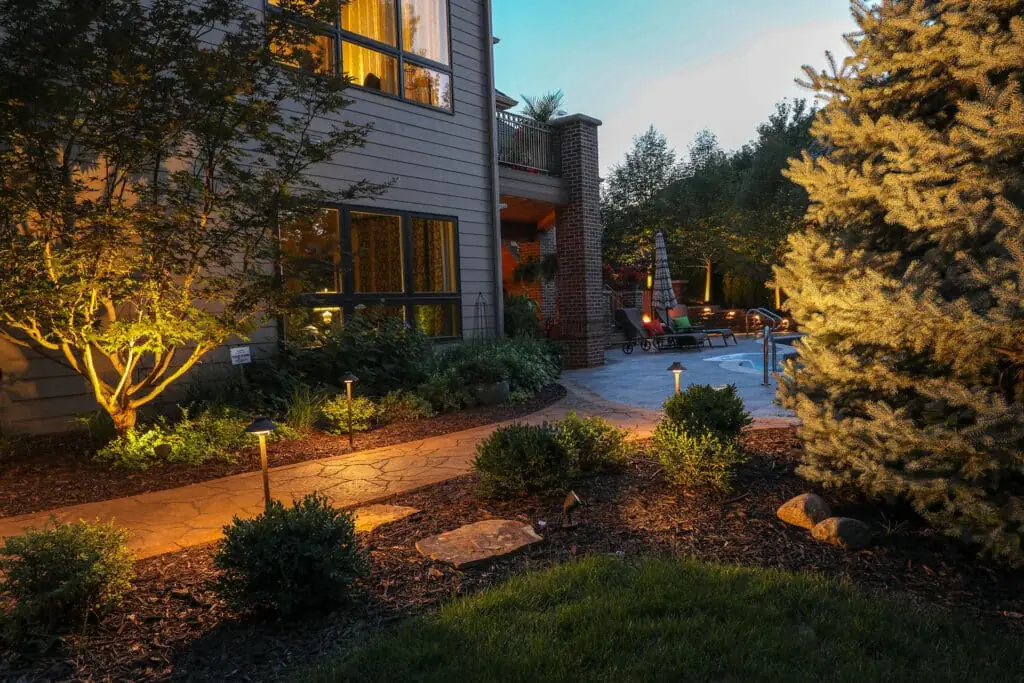
At its core, how to plan landscape lighting systems on a budget involves allocating limited financial resources toward components and design strategies that maximize visual hierarchy, electrical safety, and long-term durability. This discipline requires balancing initial equipment expenditures against lifecycle maintenance costs. Many property owners approach financial planning through a surface-level lens, calculating costs solely by multiplying the number of desired fixtures by a baseline unit price. This oversimplification ignores hidden expenses, such as voltage drop remediation, trenching labor, transformer capacity upgrades, and early component replacements caused by poor sub-grade protection.
A sophisticated economic interpretation treats an exterior lighting project as a modular ecosystem rather than a monolithic purchase. Financial efficiency is achieved by identifying high-value focal points—such as mature specimen trees or primary architectural entryways—and using negative space and shadow to create depth, rather than illuminating every linear foot of property border. Furthermore, understanding the true cost structure requires evaluating how low-voltage system architecture reduces material expenses by eliminating the rigid conduit and deep burial depth requirements mandated by 120-volt line-voltage codes.
Public discourse on economical design frequently promotes cheap consumer-grade hardware as a smart financial shortcut. However, purchasing low-cost fixtures stamped with inadequate weather ratings typically triggers a cycle of premature failure, forcing total system replacement within a few short years. True fiscal stewardship relies on investing in robust core infrastructure—specifically transformers and wire splices—while judiciously selecting modular, serviceable light fixtures that can be upgraded or expanded incrementally over time.
Deep Contextual Background
The evolution of low-voltage illumination has fundamentally altered the economic feasibility of exterior lighting for property owners. In decades past, residential and commercial landscape lighting relied heavily on 120-volt incandescent systems. These installations demanded rigid metallic conduit, deep trenching below the frost line, and licensed electrical contractors for every junction box installation, rendering budget-conscious deployment nearly impossible due to high labor and regulatory overhead.
The widespread introduction of 12-volt and 24-volt alternating current systems via step-down magnetic transformers democratized exterior design. By reducing shock hazards and relaxing burial depth codes, low-voltage networks allowed property owners to execute self-installation safely. Yet, early low-voltage systems were plagued by the high energy draw and short operational lifespans of incandescent and halogen lamps, which required frequent bulb replacements and high-capacity, expensive transformers to manage heavy electrical loads.
The contemporary landscape lighting economy has been reshaped by the maturation of Solid-State Lighting technology. LEDs reduced electrical load requirements by up to 80 percent compared to legacy lamps. This dramatic drop in wattage completely revolutionized budget planning: a transformer rated for 300 watts can now power an extensive array of fixtures that previously would have demanded multiple heavy-duty power units. Concurrently, the availability of modular, direct-burial components has lowered the barrier to entry, enabling property stewards to construct highly sophisticated, energy-efficient lighting networks incrementally without compromising structural integrity.
Conceptual Frameworks and Mental Models
Optimizing financial resources across an exterior lighting project requires structured mental models that govern decision-making under scarcity.
The Core-Periphery Allocation Model
This model divides a property into primary focal zones and secondary ambient zones. The core commands the majority of the financial budget, investing in high-end, durable fixtures and precise optical beam spreads for key architectural elements. The periphery utilizes minimalist, lower-cost fixtures or relies on reflected ambient spill light from the core. This asymmetric distribution concentrates capital where visual returns are highest.
The Total Cost of Ownership Horizon
Budgetary planning must extend beyond initial purchase receipts. The total cost of ownership mental model forces evaluation of a component’s lifecycle cost over a five-to-ten-year window. A budget fixture priced at fifteen dollars that fails due to moisture ingress within eighteen months incurs replacement labor, downtime, and material costs that far exceed a fifty-dollar commercial-grade fixture engineered to operate reliably for a decade.
The Voltage Drop Boundary Condition
Electrical resistance across long wire runs consumes voltage, causing fixtures at the end of a line to dim noticeably. Budget planning often fails when installers attempt to save money by using thin, under-gauge wire over long distances. The voltage drop mental model dictates that spending slightly more on heavier gauge copper wire preserves lamp output consistency, preventing the need to purchase supplemental transformers or booster units later.
The Layered Illumination Hierarchy
Rather than treating lighting as uniform illumination, this model categorizes light into functional layers: safety lighting, task lighting, and aesthetic accent lighting. Under a strict budget, safety lighting is prioritized for tripping hazards like stairs and primary pathways. Aesthetic accent lighting is then layered incrementally as remaining funds allow, ensuring financial allocations align with practical necessity.
Key Categories and Architectural Variations
Exterior lighting hardware encompasses several functional categories, each carrying distinct cost-to-performance trade-offs that dictate budget allocation.
Low-Voltage Magnetic Transformers
The heart of any budget system, transformers step down household voltage to safe levels. Choices range from basic manual timers to smart astronomical photocells.
-
Electronic units are inexpensive but sensitive to voltage spikes and incompatible with many mechanical timers.
-
Magnetic toroidal options cost more upfront but offer rugged durability, silent operation, and multi-decade lifespans.
Path and Area Luminaires
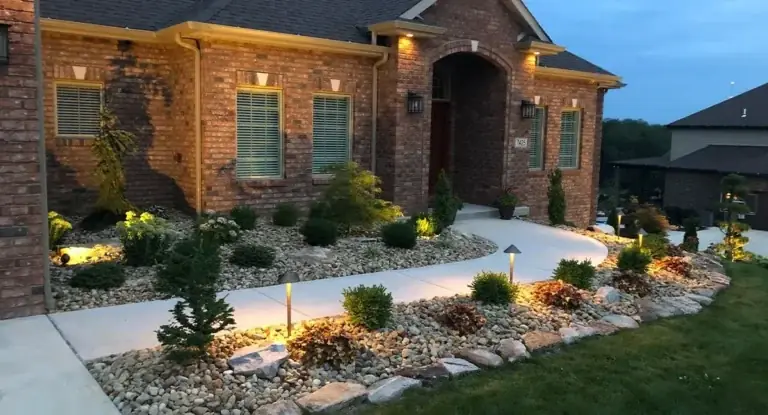
Designed to illuminate walkways and low plantings, these stem-mounted fixtures define circulation routes. Plastic composite stakes and stems crack under minor lawnmower impacts and UV exposure. Investing in cast aluminum or basic brass stems prevents recurring replacement expenses.
Uplights and Accent Spotlights
Used to graze architectural masonry or highlight tree canopies, these directional fixtures create dramatic depth. Fixed-beam fixtures are cheaper than adjustable zoom optics but offer zero post-installation flexibility if plant growth alters the focal landscape.
Hardscape and Step Lights
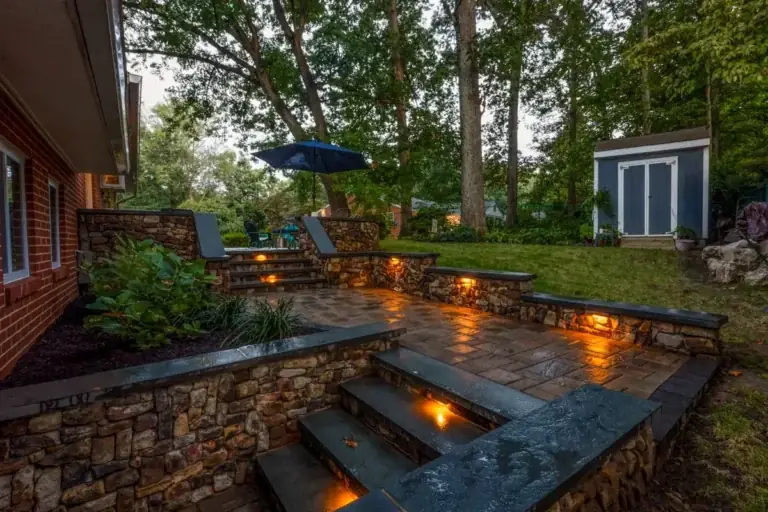
Integrated into retaining walls, handrails, and stair risers, these low-profile units ensure night safety. Surface-mounted strip lights are economical to install but vulnerable to moisture delamination, whereas recessed masonry housing units require intensive initial installation labor but provide permanent security.
Architectural Comparison Table
| Fixture / Component Category | Upfront Cost Profile | Primary Budget Risk | Long-Term Value Index |
| Electronic Plug-In Transformers | Low | Premature electronic failure from surges | Moderate |
| Magnetic Core Transformers | Moderate to High | Heavy weight; higher initial outlay | High |
| Composite Plastic Path Lights | Low | UV embrittlement and mechanical breakage | Low |
| Cast Aluminum Accent Fixtures | Moderate | Paint blistering and thread corrosion | Moderate |
| Solid Cast Brass Luminaires | High | Significant initial material expenditure | Exceptionally High |
| Direct-Burial 12-Gauge Cable | Moderate | Voltage drop over extended runs if under-gauged | High |
Realistic Decision Logic
When structuring a budget-conscious project, the installer must evaluate site geometry against electrical load limits. If a property features long linear boundaries, spending capital on heavy-gauge cable is mandatory to avoid voltage drop, even if it requires temporarily reducing the total number of fixtures installed in phase one. Conversely, for compact courtyard gardens, capital can be shifted toward higher-quality accent fixtures, as wire run lengths remain minimal and electrical resistance is negligible.
Detailed Real-World Scenarios
Examining practical deployment environments illustrates how fiscal constraints intersect with engineering realities.
The Extended Suburban Frontage
A suburban property owner with a wide frontage wishes to illuminate a mature oak tree and a meandering front pathway on a strict budget. The setup features a 150-foot run from the garage-mounted transformer location to the oak tree, dense clay soil, and a strict fiscal cap. The installer weighs purchasing a cheap 14-gauge wire bundle versus investing in a heavier 10-gauge direct-burial cable.
Selecting the cheap 14-gauge wire results in a significant voltage drop by the end of the run, causing the oak tree uplights to emit a dull amber glow. To compensate for the dim light, the owner attempts to install higher-wattage lamps, overloading circuit calculations and causing thermal stress on the transformer. Reallocating the budget to utilize a heavier 10-gauge home-run wire topology ensures uniform voltage delivery and stable long-term performance without requiring secondary power supplies.
Multi-Phase Courtyard Transformation
A commercial property manager operating on an annual operational budget needs to illuminate a central courtyard dining space without exceeding quarterly expense allocations. The project features phased spending limits and a requirement for immediate safety compliance on stair treads. The manager chooses to split the installation into three distinct phases: safety lighting first, wall washing second, and tree canopy uplighting last.
An initial low-bid contractor attempts to use indoor-rated wire nuts inside exterior junction boxes during phase one to cut labor costs. The first heavy autumn rain short-circuits the entire pathway grid, neutralizing safety lighting. Halting expansion to redirect remaining funds into professional silicone-filled gel wire connectors and waterproof junction vaults ensures the foundational safety tier is permanently secured.
Sloped Retaining Wall Economy
A residential hillside property requires safety lighting along a newly constructed 80-foot stone retaining wall, constrained by tight landscaping reserves. Difficult rocky excavation and an inability to dig deep trenches limit options. Daisy-chaining too many fixtures onto a single high-resistance leg causes terminal voltage starvation at the far end of the retaining wall. Implementing a balanced split-load loop topology powered from a central feed point resolves flickering luminaires and premature driver failure.
Planning, Cost, and Resource Dynamics
Balancing financial accounts in exterior illumination requires understanding the relationship between material selection, labor allocation, and long-term operating overhead.
Direct and Indirect Financial Realities
The direct cost of a lighting installation encompasses transformers, cables, fixtures, and lamps. However, indirect costs frequently dictate project success. Choosing the cheapest available fixtures often incurs hidden labor penalties: brittle mounting spikes snap during installation in hard soils, requiring replacement parts and delayed completion schedules. Conversely, investing moderately in cast aluminum or entry-level brass hardware eliminates repeat installation labor.
Opportunity Cost and Energy Efficiency
Operating costs in modern systems are exceptionally low, but inefficient transformer selection can introduce parasitic power draws that increase utility overhead over years of operation. Furthermore, choosing to install infrastructure in phases prevents financial strain while allowing property owners to evaluate how seasonal foliage changes affect lighting angles before committing capital to permanent accent fixtures.
Financial and Resource Allocation Range Table
| Project Scale | Typical Upfront Capital Range | Recommended Phase Structure | Primary Cost Saving Strategy |
| Small Residential Yard | Low ($300 – $800) | Single-phase execution | Self-installation, basic magnetic transformer, path lights only |
| Medium Suburban Property | Moderate ($1,200 – $3,500) | Two-phase (Safety first, accents second) | Strategic wire-gauge planning, selective focal tree uplighting |
| Large Estate / Commercial | High ($5,000 – $15,000+) | Multi-tier master plan across fiscal quarters | Centralized high-capacity magnetic hubs, commercial-grade brass |
Tools, Strategies, and Support Systems
Executing a budget-friendly installation without sacrificing quality requires utilizing specific tools and strategic installation methods.
-
Digital Multimeter for Voltage Verification: A basic digital multimeter is an essential diagnostic tool. Before burying wire runs, installers can measure voltage directly at the furthest fixture socket to verify that voltage drop remains within acceptable tolerances.
-
Manual Trenching Edgers: Labor represents a major hidden project cost. Renting heavy trenching machinery for a small residential yard is financially inefficient. Utilizing a manual half-moon turf edger allows precise, narrow sub-grade cuts with zero equipment rental fees.
-
Direct-Burial Gel Splice Enclosures: Protecting wire connections from moisture is non-negotiable. Rather than purchasing expensive pre-fabricated waterproof junction boxes, budget installers can utilize single-use, pre-filled dielectric silicone wire nuts.
-
Photocell Integration: Automating system run-times eliminates wasted electricity. Integrating a plug-in astronomical timer ensures fixtures activate precisely at dusk and deactivate at a set pre-dawn hour.
-
Multi-Tap Transformer Terminals: Selecting a magnetic transformer equipped with multi-tap output terminals allows compensation for voltage drop over long wire runs without requiring a larger power unit.
-
Strategic Positioning: Maximizing visual impact on a limited fixture budget relies on silhouette and shadow. Placing a single inexpensive uplight behind a sculptural shrub achieves the visual weight of multiple front-facing fixtures.
Risk Landscape and Failure Modes
Navigating financial limits introduces specific operational risks that can compromise system integrity if ignored.
Voltage Starvation and Thermal Stress
Attempting to save money by overloading a single transformer circuit with too many LED fixtures or running thin wire over excessive distances causes severe voltage drop. Reduced voltage forces drivers to draw higher current to maintain lumen output, accelerating internal component degradation and causing premature driver failure.
Sub-Grade Moisture Corrosion
Using unsealed wire connections or substandard electrical tape in underground splices invites soil moisture and electrolytic corrosion. This failure mode creates intermittent short circuits that trip transformer breakers and force expensive exploratory excavation beneath established turf.
Mechanical Shear and Lawn Maintenance Damage
Budget installations often feature shallow cable burial or fragile plastic mounting stems. Routine lawn maintenance equipment—such as string trimmers and commercial mowers—can easily nick cables or shear fixture stems off at ground level, creating safety hazards and repair expenses.
Governance, Maintenance, and Long-Term Adaptation
Maintaining an economically optimized lighting system requires structured operational habits to protect initial capital investments.
-
Semi-Annual System Audits: Conduct visual and electrical checks twice a year—inspecting wire splices, checking fixture alignment disturbed by soil settling, and testing transformer output voltages.
-
Vegetation Management Protocols: Trim encroaching turf, ground cover, and shrubs away from low-voltage fixtures quarterly to prevent light blockage and moisture retention around optical housings.
-
Layered Maintenance Checklist:
-
Verify photocell sensor cleanliness to ensure accurate dusk-to-dawn switching.
-
Test transformer circuit breakers and inspect terminal block screw tightness.
-
Check for exposed cable sections resulting from soil erosion or animal activity.
-
Clean glass lenses of mineral scale, pollen, and debris to maintain optical efficiency.
-
Measurement, Tracking, and Evaluation
Assessing the ongoing success of an economical lighting installation involves monitoring both operational performance indicators and aesthetic yield.
Leading and Lagging Indicators
Leading indicators include steady operational voltage readings at terminal fixtures, clear optical output without flickering, and intact waterproof seals during seasonal checks. Lagging indicators reflect past budgeting mistakes, such as the frequency of transformer breaker trips, the count of failed plastic fixtures, and recurring repair labor hours.
1: Budget System Commissioning Record
-
Zone: Front Pathway Safety Circuit
-
Transformer Output: 12V Tap / Measured End-Voltage: 11.2V (Optimal)
-
Cable Specification: 10-Gauge Direct-Burial Stranded Copper
-
Splice Method: Dielectric Gel-Filled Twist Connectors
-
Installer Initials: D.R. / Date: 2026-04-14
2: Phased Expansion Review Record
-
Zone: Rear Courtyard Accent Tier (Phase 2)
-
Evaluated Anomaly: Minor dimming observed on Fixture #4.
-
Root Cause Analysis: Additional unauthorized light added to daisy-chain run, exceeding safe branch amperage.
-
Corrective Action: Isolated run into a dedicated secondary home-run feed back to transformer multi-tap.
-
Technician: M.S. / Date: 2026-08-20
3: Maintenance Audit Entry Record
-
Zone: Perimeter Shrubbery Border
-
Observed Condition: Trimmer nick on 12-gauge cable insulation; no short trip yet.
-
Corrective Action: Excavated 6 inches around cable, applied vulcanizing rubber tape and heavy-duty heat-shrink sleeve, reburied at proper 6-inch depth.
-
Inspector: D.R. / Date: 2026-09-12
Common Misconceptions and Oversimplifications
1. More fixtures automatically create a better lighting design.
Flooding a property with excessive light creates visual clutter and washes out architectural nuance. Strategic placement of a few carefully aimed fixtures produces superior depth and dramatic contrast on a budget.
2. Low-voltage systems do not require professional wiring practices.
Although low-voltage systems carry minimal shock hazard, poor wire splicing and inadequate gauge selection cause voltage drop, component overheating, and chronic system failures.
3. Buying the cheapest consumer-grade kit saves money long-term.
Inexpensive plastic kits degrade rapidly under UV exposure and soil moisture, requiring complete replacement within two to three seasons and resulting in higher cumulative costs than investing in modular metal components.
4. Transformers can be loaded to 100 percent capacity safely.
Operating a transformer at maximum wattage capacity accelerates core heating and shortens unit lifespan. Best practice dictates loading transformers to no more than 80 percent of their rated maximum capacity.
5. Burying cables deep is unnecessary for low voltage.
While code requirements differ from line-voltage systems, failing to bury low-voltage cable at least 4 to 6 inches deep exposes the line to routine lawn care equipment damage and animal activity.
6. Solar-powered budget lights rival wired low-voltage systems.
Inexpensive standalone solar garden lights lack consistent lumen output, suffer from battery degradation within a year, and fail to provide reliable illumination during overcast winter months.
Ethical, Practical, and Contextual Considerations
Practicing economy in exterior illumination involves balancing financial limits with environmental responsibility and community impact. Over-lighting a property not only inflates energy consumption and equipment costs but also contributes to light pollution, disrupting nocturnal wildlife and neighboring properties. By designing with restraint—focusing light strictly where it serves architectural or safety functions—property owners minimize light trespass, reduce electronic waste from premature hardware disposal, and achieve an elegant, respectful integration with the night environment.
Conclusion
Mastering how to plan landscape lighting systems on a budget is an exercise in disciplined prioritization, structural engineering, and strategic resource allocation. Financial constraints do not restrict aesthetic expression; rather, they eliminate waste and direct capital toward resilient infrastructure and high-impact focal points. By prioritizing core electrical reliability, selecting serviceable metal hardware, calculating voltage drop accurately, and deploying installations in structured phases, property owners can build enduring, professional-grade illumination networks. Thoughtful planning transforms economic boundaries into an asset, resulting in a balanced, secure, and visually striking nightscape that endures for years to come.