Best Landscape Lighting for Digital Nomads: Remote Property Guide
Modern spatial management across international borders increasingly intersects with location-independent lifestyles, where property owners maintain domestic assets while residing thousands of miles away. Managing secondary homesteads, investment rentals, or remote rural retreats requires an architectural infrastructure that operates autonomously without daily human intervention. Exterior illumination systems, traditionally managed via local wall switches and physical inspections, now demand sophisticated remote oversight to ensure security and aesthetic preservation during long absences.
Evaluating exterior illumination for transient property owners involves looking beyond standard aesthetic fixtures to analyze cloud connectivity, low-maintenance component durability, and fail-safe automation protocols. Whether coordinating property management across multiple time zones or monitoring energy consumption from abroad, remote asset administrators must carefully balance system complexity against operational reliability.
This reference manual provides an exhaustive structural and operational framework for evaluating and contrasting autonomous exterior lighting solutions. The following sections dissect network latency, power regulation, and remote governance methodologies essential when identifying the best landscape lighting for digital nomads. Through rigorous analysis of smart-home ecosystems, low-voltage electrical parameters, and long-term asset stewardship, this guide establishes a definitive standard for remote property management.
Understanding the best landscape lighting for digital nomads
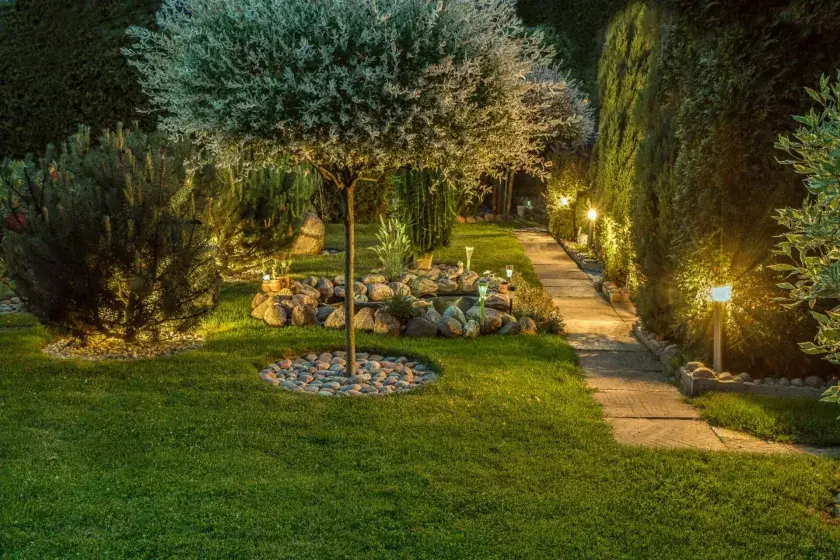
When evaluating the best landscape lighting for digital nomads, the core objective is determining how effectively an exterior electrical network functions without physical supervision or manual intervention. A truly remote-optimized lighting installation is not merely a collection of smart bulbs controlled by a mobile phone application; it represents an integrated, resilient ecosystem capable of self-diagnosis, automated scheduling, and remote error mitigation across vast geographical distances.
A common misunderstanding frames remote-capable lighting as a consumer-grade novelty that relies on fragile Wi-Fi connections and consumer smart plugs. This oversimplification assumes that standard off-the-shelf smart hardware can survive extreme weather fluctuations and maintain stable connectivity without local administrative support. In reality, industrial-grade remote lighting architectures utilize hardwired local controllers backed by cellular fail-safes, multi-zone landscape transformers, and cloud-synced astronomical timers that operate independently of local network drops.
Relying on residential, non-automated lighting models introduces severe vulnerabilities for property owners who travel frequently. When a standard transformer suffers a power surge or a photocell fails while the owner is abroad, the property remains plunged in darkness or floods neighboring yards with uninterrupted glare, inviting security risks and potential code violations. Understanding the technical requirements of autonomous outdoor illumination ensures that remote properties remain secure, compliant, and visually balanced at all times.
Deep Contextual Background
The evolution of remote-capable exterior lighting reflects broader technological shifts in cloud computing, internet-of-things (IoT) architecture, and the explosive growth of location-independent work styles. Historically, outdoor illumination was managed entirely through mechanical dial timers or manual photocells attached directly to physical transformers. Property owners had to be physically present on site to adjust schedules for daylight saving time, modify zone brightness, or troubleshoot tripped breakers after a severe storm.
The subsequent introduction of solid-state LED systems and smart-home microprocessors revolutionized the industry, allowing low-voltage transformers to connect to home routers. Early iterations of smart lighting, however, were plagued by unreliable radio frequencies, dropped connections, and proprietary software ecosystems that lacked enterprise-grade stability. These systems were ill-suited for long-term unattended operation, frequently requiring manual hard-reboots that frustrated remote property owners.
As remote work and digital nomadism matured into a permanent global demographic shift, the demand for robust, zero-touch infrastructure surged. Manufacturers responded by engineering commercial-grade smart transformers equipped with onboard memory, local astronomical algorithms, and redundant cellular communication modules. Today, identifying and installing the best landscape lighting for digital nomads requires balancing advanced cloud management with rugged, storm-resistant electrical hardware designed for multi-year autonomy.
Conceptual Frameworks and Mental Models
Administering and evaluating remote-optimized lighting networks requires structured mental models that account for network latency, power stability, and autonomous operational redundancy.
The Zero-Touch Operational Horizon
This model views the lighting installation as a completely self-sustaining entity that requires zero physical touchpoints during months of owner absence. Every component—from the photocell sensor to the Wi-Fi transformer—must feature self-healing network protocols and automatic fault recovery.
The Redundant Communication Layer
Relying on a single home Wi-Fi router for remote lighting control introduces a single point of failure. This mental model dictates that robust remote systems must utilize secondary communication pathways, such as cellular gateways or local mesh networks, to maintain remote access even if the primary internet connection drops.
The Power-Surge Isolation Standard
Remote properties are frequently vulnerable to lightning strikes and electrical grid fluctuations during seasonal storms. This model requires transformer hubs to incorporate industrial-grade transient voltage surge suppression (TVSS) to protect sensitive microprocessors from permanent fried states while the owner is overseas.
The Automated Diagnostics Feedback Loop
Remote property management requires real-time data visibility without manual physical inspection. This mental model mandates that lighting systems actively report operational telemetry—such as secondary amperage draw, voltage drop, and zone status—directly to cloud dashboards accessible from any global timezone.
Key Categories and Architectural Variations
Structuring and contrasting remote-capable lighting systems involves navigating several distinct tier levels and technological frameworks, each carrying specific operational trade-offs for property owners.
Basic Consumer Smart-Plug Conversions
These entry-level setups utilize standard low-voltage transformers plugged into smart outlets, allowing basic on-off control via mobile applications.
-
Trade-Offs: Inexpensive and easy to install, but lacks multi-zone dimming, voltage telemetry, and robust surge protection.
Dedicated Smart-Transformer Ecosystems
Mid-tier solutions rely on purpose-built low-voltage transformers featuring native Wi-Fi or Bluetooth Low Energy connectivity, astronomical scheduling, and multi-tap voltage controls.
-
Trade-Offs: High reliability and granular zone control, but dependent on stable local router connectivity.
Cellular-Backed Enterprise Remote Hubs
High-tier installations incorporate commercial-grade transformers with integrated cellular data modules, bypassing local home internet dependencies entirely.
-
Trade-Offs: Requires monthly cellular data subscription fees, but delivers absolute remote accessibility and uncompromised security.
Fully Autonomous AI-Managed Estates
Tailored for luxury remote compounds, these systems use local environmental sensors and adaptive algorithms to adjust illumination based on local weather, ambient moon phases, and security camera triggers.
-
Trade-Offs: Substantial upfront capital investment and complex initial programming, but achieves ultimate autonomous asset stewardship.
Architectural Comparison Table
| System Tier | Primary Connectivity | Remote Telemetry Depth | Power Surge Protection | Typical Application Scope |
| Consumer Smart-Plug | Standard Home Wi-Fi | Basic On/Off status | Minimal / Outlet level | Small vacation cottages |
| Smart-Transformer | Dual-band Wi-Fi / Mesh | Voltage & Zone control | Moderate internal TVSS | Standard residential homes |
| Cellular-Backed Hub | 4G/5G LTE + Wi-Fi | Full electrical telemetry | Heavy-duty industrial grade | Remote estates & rural retreats |
| AI-Managed Estate | Dedicated Gateway | Real-time adaptive diagnostics | Enterprise-grade multi-stage | Multi-acre luxury compounds |
Realistic Decision Logic
When property stewards evaluate options to identify the best landscape lighting for digital nomads, decision logic must center on local infrastructure reliability and travel frequency. If a digital nomad spends nine months a year traveling across international time zones while leaving a property vacant in a storm-prone rural area, relying on consumer Wi-Fi is unacceptable. The property owner must invest in a cellular-backed enterprise hub that guarantees remote communication and power protection independent of local broadband stability.
Detailed Real-World Scenarios
Examining practical remote management scenarios illustrates how deploying the correct lighting infrastructure prevents operational failures across diverse real-world properties.
Case Study A: The Remote Alpine Retreat Power Failure
An architecturally significant mountain home in Colorado remained vacant for six months while the owner worked remotely from Southeast Asia.
-
Constraints: Severe winter lightning storms; heavy snow loads; unstable local broadband internet.
-
Decision Points: The owner installed a cellular-backed smart transformer system with integrated surge suppression before departing.
-
Failure Modes Identified: A severe spring electrical surge fried the local broadband router, cutting off standard residential internet access to the property.
-
Second-Order Effects: Because the lighting system relied on a secondary cellular gateway, the primary control interface remained fully operational despite the dead router.
-
Resolution: The owner used a mobile app via cellular connection to adjust holiday security schedules and verify that transformer voltage remained stable throughout the storm season.
Field Incident B: The Coastal Vacation Rental Timer Drift
A seaside property owner in Florida operated a remote rental while traveling internationally, relying on a basic consumer-grade smart plug for exterior illumination.
-
Constraints: High humidity; fluctuating Wi-Fi router stability; mandatory municipal dusk-to-dawn lighting compliance.
-
Decision Points: The owner attempted to manage schedules remotely using a standard consumer app connected to a home router.
-
Failure Modes Identified: A local power blip reset the router’s internal clock, causing the smart plug to lose its astronomical schedule synchronization.
-
Second-Order Effects: The exterior lights remained illuminated during broad daylight for three consecutive weeks, triggering a formal municipal code violation notice mailed to an unmonitored address.
-
Resolution: Upon returning, the owner replaced the consumer setup with a dedicated smart transformer featuring onboard real-time clock batteries and astronomical tracking.
Operational Deployment C: The Multi-Zone European Nomad Compound
A digital nomad couple maintaining a restored stone farmhouse in rural Portugal needed secure, automated night lighting to deter trespassers while traveling through Tokyo and New York.
-
Constraints: Asymmetric stone architecture; varying mobile network signals; complex multi-acre garden zones.
-
Decision Points: The couple deployed a multi-tap smart transformer paired with a redundant outdoor mesh router network.
-
Failure Modes Identified: Thick stone walls blocked Wi-Fi signals from reaching the rear garden transformer housing located fifty yards from the main house.
-
Second-Order Effects: Rear architectural accent lights could not be adjusted or monitored remotely, leaving a blind spot in the property’s evening security posture.
-
Resolution: Technicians installed an outdoor-rated Wi-Fi extender node midway across the courtyard, bridging the network gap and restoring full remote telemetry to all garden zones.
Planning, Cost, and Resource Dynamics
Administering an effective remote lighting strategy requires understanding the economic relationship between initial hardware investments and long-term remote maintenance savings.
Direct and Indirect Financial Realities
While acquiring commercial-grade smart transformers and cellular-backed gateways requires a higher upfront financial commitment than standard residential hardware, it consistently prevents catastrophic service costs. When a remote property suffers an unmanaged electrical fault abroad, hiring emergency local contractors to troubleshoot and excavate damaged lines generates exorbitant invoices. Investing in robust remote monitoring equipment eliminates these emergency dispatch fees.
Opportunity Cost and Resource Allocation
Digital nomads must balance the mental overhead of managing property emergencies across different time zones against the reliability of automated asset management. Enrolling in or deploying a self-diagnosing lighting ecosystem ensures that travelers can maintain deep focus on professional commitments without worrying about property security failures thousands of miles away.
Financial and Resource Allocation Range Table
| System Architecture Level | Initial Hardware Investment | Ongoing Operational Cost | Risk Mitigation Profile |
| Consumer Smart-Plug Setup | $150 – $300 | $0 / year | High vulnerability to network drops and timer drift |
| Standard Smart Transformer | $600 – $1,500 | $0 / year | Moderate reliability; requires stable home Wi-Fi |
| Cellular-Backed Remote Hub | $2,000 – $4,500 | $60 – $120 / year (Data plan) | Exceptional reliability; independent of home broadband |
| AI-Managed Estate System | $5,000 – $12,000+ | $150 – $300 / year | Complete autonomous oversight and self-healing diagnostics |
Tools, Strategies, and Support Systems
Maximizing the effectiveness of remote-optimized lighting requires specialized diagnostic software, hardware redundancies, and logistical support systems.
1. Cloud-Synced Astronomical Timers
Remote lighting systems must utilize onboard microprocessors that calculate local sunset and sunrise times automatically based on GPS coordinates, eliminating schedule drift during network outages.
2. Cellular Failover Gateways
To ensure uninterrupted remote access, advanced installations incorporate 4G/5G LTE cellular backup routers that activate automatically when primary broadband signals fail.
3. Industrial Transient Voltage Surge Suppressors (TVSS)
Protecting remote electrical hubs requires installing multi-stage surge protection modules directly ahead of the low-voltage transformer core to absorb lightning strikes and grid spikes.
4. Real-Time Voltage and Amperage Telemetry Apps
Digital nomads rely on mobile dashboards that display live electrical load data, alerting the user immediately if a circuit experiences a short or overload.
5. Automated Firmware Update Protocols
Remote transformers must support silent, over-the-air (OTA) firmware updates to patch security vulnerabilities and maintain cloud compatibility without user intervention.
6. Geofenced Security Integration Modules
Advanced setups link exterior lighting zones to exterior security cameras, allowing lights to flash or brighten automatically when motion is detected while the owner is abroad.
Risk Landscape and Failure Modes
Failing to design a robust remote lighting infrastructure exposes vacant properties to compounding security and electrical risk vectors.
Network Isolation and Deadlocks
Relying entirely on residential Wi-Fi without local scheduling memory means that an extended internet outage leaves the lighting system completely frozen in its last known state, unable to respond to dusk-to-dawn commands.
Unmonitored Secondary Short Circuits
If a landscaping contractor severs a buried cable while the property owner is traveling, an unmonitored system will repeatedly trip the transformer breaker, disabling the entire property’s security lighting indefinitely.
Firmware Vulnerabilities and Cyber Exploitation
Smart home devices connected to unsecured home networks can become entry points for malicious actors if manufacturers do not provide automated security patch updates.
Governance, Maintenance, and Long-Term Adaptation
Administering long-term property asset management from a distance requires disciplined digital monitoring protocols, periodic software reviews, and systematic maintenance checklists.
-
Monthly Cloud Telemetry Audits: Review transformer voltage logs and zone power draws remotely via mobile dashboards on the first of every month.
-
Quarterly Firmware and Security Checks: Verify that all smart hubs and cellular gateways have received the latest manufacturer security patches.
-
Layered Maintenance Checklist:
-
Confirm astronomical timer accuracy following seasonal time changes via remote dashboard.
-
Review motion-sensor trigger logs and camera-linked lighting responses.
-
Inspect cellular signal strength indicators on backup gateway modules.
-
Coordinate semi-annual physical site inspections with local property managers to check for physical wear.
-
Measurement, Tracking, and Evaluation
Assessing the ongoing performance and reliability of a remote lighting installation involves monitoring both qualitative and quantitative indicators.
Leading and Lagging Indicators
Leading indicators include stable cloud connectivity uptime, consistent secondary voltage readings across all transformer taps, and flawless automated schedule execution. Lagging indicators reflect infrastructure weaknesses, such as prolonged offline status alerts, repeated circuit breaker trips, and neighborhood complaints regarding unmanaged lighting glare.
Common Misconceptions and Oversimplifications
1. Any smart bulb or smart plug is suitable for remote landscape lighting management.
Consumer indoor smart plugs lack weatherproofing, surge protection, and low-voltage transformer integration required for heavy-duty exterior environments.
2. Home Wi-Fi routers never fail or lose connection during extended absences.
Residential broadband connections are notoriously unstable, making cellular backup gateways essential for true remote property reliability.
3. Smart lighting systems eliminate the need for physical property management oversight.
While automation handles daily operation, physical hazards like severed cables, chewed wires, and shifted ground mounts still require periodic on-site inspection.
4. Setting up a remote lighting system requires advanced computer programming skills.
Modern enterprise-grade smart transformers feature intuitive mobile dashboards designed for seamless remote administration without technical complexity.
5. Cloud security risks make remote lighting installations unsafe for vacant homes.
Using encrypted, enterprise-grade smart hubs with automated firmware updates ensures robust cybersecurity protection against external hacking.
6. Investing in cellular-backed lighting hubs is an unnecessary luxury expense.
Preventing a single security breach or avoiding an emergency contractor dispatch far outweighs the modest cost of cellular data connectivity.
Ethical, Practical, and Contextual Considerations
Administering remote-capable illumination involves balancing property security and aesthetic goals with broader environmental and community responsibility. Automated lighting systems configured for digital nomads must incorporate strict dark-sky compliance principles, utilizing precise optical shielding and scheduled dimming protocols to prevent light pollution and energy waste while the property is vacant. Furthermore, respecting neighboring privacy by avoiding aggressive motion-activated floodlighting ensures that remote estates harmonize respectfully with their surrounding communities. By upholding rigorous technical and ethical standards, location-independent property owners maintain secure, beautiful estates without disrupting the nocturnal ecosystem.
Conclusion
Mastering the selection and administration of the best landscape lighting for digital nomads is an exercise in engineering resilience, cloud connectivity, and autonomous system design. Relying on fragile consumer smart-plug setups and unstable home Wi-Fi networks inevitably leads to network dropouts, timer drift, and vulnerable property dark zones. By investing in a robust, cellular-backed smart lighting architecture equipped with industrial surge suppression and real-time electrical telemetry, digital nomads secure absolute operational control over their exterior assets from anywhere across the globe. Thorough planning and disciplined digital governance transform remote property lighting from a fragile vulnerability into a permanent, self-sustaining security asset.