Exotic Landscape Lighting USA Expert Guide
Architectural outdoor illumination across diverse North American ecosystems requires navigating stark climatic variations, stringent regional municipal codes, and distinct botanical palettes. When property owners seek to incorporate rare botanical specimens, tropical aesthetics, or unconventional design motifs into their outdoor spaces, standard regional lighting approaches frequently prove inadequate. Translating vibrant, non-native design paradigms—often inspired by lush international resorts or arid Mediterranean courtyards—into the varied geoclimatic zones of the United States demands careful engineering and material adaptation.
Executing these unique nocturnal environments involves balancing high-output visual drama with energy efficiency and regional weather resilience. A design that thrives in the humid subtropical climate of South Florida will experience rapid structural failure when subjected to the deep freeze-thaw cycles of the American Northeast or the blistering thermal radiation of the Southwest deserts. Consequently, successful architectural implementation requires a deep understanding of local environmental stressors, soil chemistries, and regional electrical constraints.
This reference manual provides an exhaustive structural and operational framework for designing, engineering, and maintaining specialized outdoor illumination networks. The following sections dissect regional climate adaptations, specialized optical fixtures, electrical distribution topologies, and long-term asset preservation methodologies. Through rigorous analysis of environmental risk vectors, metallurgical compatibility, and system longevity, this guide establishes a definitive technical standard for specialized exterior lighting across North America.
Understanding “exotic landscape lighting usa”
When designers investigate exotic landscape lighting usa, the primary objective is adapting high-impact international aesthetic frameworks—such as Balinese resort lighting, Mediterranean courtyard illumination, or tropical palm highlighting—to local North American environmental conditions. A common pitfall involves importing foreign fixture designs or replication concepts directly without accounting for regional electrical certifications, local frost lines, and municipal dark-sky ordinances.
A widespread misconception views exotic lighting as a superficial styling exercise focused solely on colored LED bulbs and theatrical fixtures. This oversimplification ignores the complex engineering required to make delicate luminaires survive hostile domestic environments. In reality, mastering exotic landscape lighting usa requires combining creative tropical or Mediterranean visual motifs with robust, UL-listed low-voltage hardware capable of enduring freezing winters, coastal salt-fog, or torrential seasonal rains.
Relying on uncertified consumer-grade novelties introduces severe structural and fire safety vulnerabilities. When installers run non-rated decorative fixtures on sub-grade circuits without proper waterproofing, ground moisture infiltration triggers rapid electrical failures. True professional design demands rigorous compliance with the National Electrical Code (NEC Article 411) alongside specialized optical planning.
Deep Contextual Background
The evolution of specialized and distinctive exterior illumination in North America reflects a broader cultural shift toward outdoor living spaces and high-end residential landscaping over the past three decades. Historically, American exterior lighting was strictly utilitarian, consisting of stark security floodlights mounted on building eaves or simple incandescent path markers. The introduction of low-voltage 12-volt systems in the late twentieth century allowed homeowners to experiment with subtle garden accents, paving the way for more specialized design influences.
As international travel expanded and luxury architectural design embraced resort-style outdoor environments, consumer demand for unconventional, dramatic nightscapes surged. Homeowners sought to replicate the moody, layered illumination of Caribbean resorts and Mediterranean estates within their domestic backyards. However, early attempts to import foreign specialty fixtures frequently failed because overseas manufacturing standards did not align with North American electrical safety codes or regional climatic extremes.
Simultaneously, the commercialization of solid-state light-emitting diode technology enabled precise color-tuning, narrow-beam uplighting, and ultra-low energy consumption. Consequently, learning how to integrate exotic landscape lighting usa evolved from an informal, ad-hoc hobbyist pursuit into a highly sophisticated engineering discipline blending horticulture, electrical distribution, and architectural design.
Conceptual Frameworks and Mental Models
Designing non-traditional, high-impact exterior lighting networks requires robust mental models that account for botanical architecture, regional climate stress, and visual layering.
The Botanical Canopy Hierarchy
This foundational model categorizes vegetation into distinct vertical tiers—understory, trunk structure, and upper canopy. It dictates that specialized illumination must mimic natural light filtering through foliage rather than blasting raw light upward from the ground.
The Microclimatic Stress Horizon
Exterior lighting fixtures do not exist in a uniform national environment. This mental model requires evaluating specific regional stressors—such as coastal salinity, high humidity, soil expansion, and deep winter freezing—before selecting fixture alloys and sealing gaskets.
The Contrast and Shadow Balance
Exotic nightscapes rely heavily on darkness to create dramatic focal points. This framework dictates that negative space is just as important as illuminated subjects, preventing the flat, over-lit appearance typical of commercial parking lots.
The Thermal-Electronic Equilibrium
Specialized luminaires often house delicate electronic drivers and color-changing diodes in tight architectural spaces. This mental model ensures that fixtures provide adequate thermal dissipation pathways to prevent premature semiconductor burnout.
Key Categories and Architectural Variations
Mastering exotic landscape lighting usa involves navigating distinct fixture categories, botanical application styles, and environmental adaptations, each carrying specific engineering trade-offs.
Palm and Tropical Specimen Uplighting
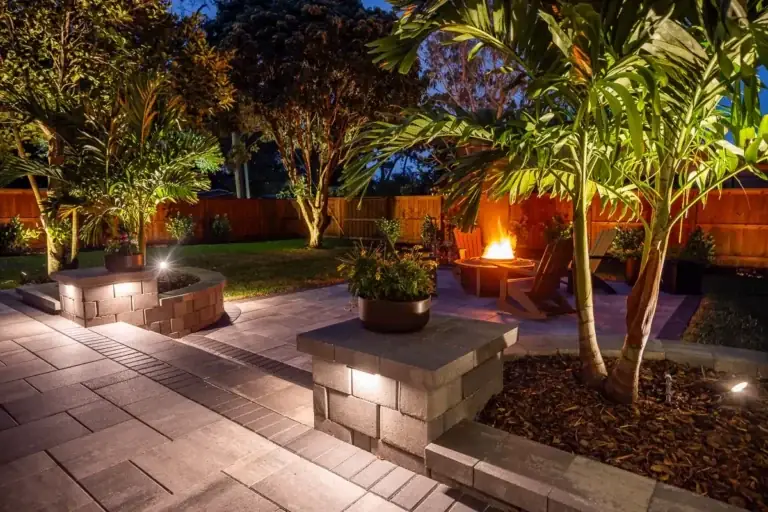
Utilizing narrow-beam, high-output directional uplights to accentuate textured trunks and fan fronds of imported or native palm species.
-
Trade-Offs: Creates striking vertical drama, but requires precise angular placement to prevent light spill into neighboring properties.
Sub-Surface Water and Pool Illumination
Integrating specialized submersible luminaires into ponds, reflecting pools, and swimming features to create glowing aquatic focal points.
-
Trade-Offs: Dramatic visual impact and enhanced night swimming safety, but demands rigorous UL-listed underwater waterproofing and strict low-voltage isolation.
Architectural Silhouette and Shadow Casting
Placing wide-flood fixtures behind dense foliage or decorative screens to cast intricate shadow patterns against blank exterior walls.
-
Trade-Offs: Produces artistic, high-end resort aesthetics, but requires exact physical positioning and unobstructed projection paths.
Color-Tunable RGBW Smart Architectural Zones
Employing digitally controllable fixtures that shift color temperatures or display dynamic hues for seasonal events or architectural moods.
-
Trade-Offs: Maximum design flexibility, but significantly higher control system complexity and vulnerability to software glitches.
Architectural Comparison Table
| Specialized Lighting Category | Primary Aesthetic Objective | Regional Climatic Vulnerability | Major Operational Advantage | Primary Engineering Limitation |
| Tropical Palm Uplighting | Trunk texture and frond glow | High wind and humidity stress | Dramatic vertical focal points | Requires precise aiming to avoid glare |
| Submersible Water Accents | Aquatic and fountain illumination | Mineral scaling and freeze cracking | Creates glowing water elements | Strict NEC underwater safety requirements |
| Silhouette Shadow Casting | Wall pattern projection | Foliage growth obstruction | Artistic resort-style ambiance | Demands exact physical positioning |
| RGBW Smart Color Tuning | Dynamic mood and seasonal shifts | Electronic driver sensitivity | Infinite color and warmth adjustment | Complex zoning and control setup |
Realistic Decision Logic
When property designers evaluate exotic landscape lighting usa for a sprawling coastal estate in South Florida, decision logic must prioritize severe salt-fog corrosion resistance over simple upfront cost. If an installer specifies powder-coated aluminum fixtures to save money in a tropical beachfront garden, salt-laden air will breach the coating within months, causing structural pitting and electrical failure. Designers must specify marine-grade 316 stainless steel or solid cast brass luminaires, ensuring long-term survival in aggressive coastal environments.
Detailed Real-World Scenarios
Examining practical electrical management scenarios illustrates how mastering exotic landscape lighting usa prevents operational failures across diverse real-world properties.
Case Study A: The Desert Oasis Resort Transformation
A luxury desert estate in Phoenix, Arizona, sought to create a lush, tropical oasis aesthetic featuring imported desert-adapted palms and sculptural architectural cacti.
-
Constraints: Extreme ambient summer temperatures exceeding 115 degrees Fahrenheit; intense ultraviolet radiation; rocky caliche soil.
-
Decision Points: Management evaluated whether standard plastic housing fixtures could withstand the thermal load or if heavy-duty metal thermal sinks were mandatory.
-
Failure Modes Identified: Initial consumer-grade plastic housing units warped severely under extreme solar radiation, cracking lens seals and admitting dust and moisture.
-
Second-Order Effects: Internal electronic drivers overheated and failed prematurely, causing frequent system dropouts during peak summer tourism months.
-
Resolution: The contractor replaced the entire inventory with heavy cast-brass fixtures featuring integrated thermal fins and high-temperature silicone gaskets, ensuring stable operation in desert heat.
Field Incident B: The Coastal Florida Palm Canopy Project
A beachfront property in Miami installed powerful uplights to showcase a grove of mature coconut palms lining the Atlantic shoreline.
-
Constraints: Aggressive salt-fog environment; high humidity; shifting sandy soils; strict local sea turtle lighting ordinances.
-
Decision Points: The electrical engineer assessed how to balance dramatic palm illumination with municipal laws prohibiting white light visible from nesting beaches.
-
Failure Modes Identified: Standard white LED uplights violated local environmental codes, resulting in municipal fines and potential harm to hatchling sea turtles.
-
Second-Order Effects: Unshielded fixtures also caused severe glare for oceanfront viewers, drawing complaints from neighbors.
-
Resolution: Engineers retrofitted the fixtures with specialized amber-filtered LED modules and precise 15-degree snoots, achieving dramatic palm illumination while maintaining full environmental code compliance.
Operational Deployment C: The Pacific Northwest Water Feature Illumination
A high-end residential property near Seattle incorporated complex multi-tier water features and koi ponds into an Asian-inspired garden nightscape.
-
Constraints: Heavy seasonal rainfall; freezing winter temperatures; damp organic soil rich in humic acids.
-
Decision Points: Planners evaluated whether surface-mounted or fully submersible lighting units would best highlight cascading rock waterfalls.
-
Failure Modes Identified: Inadequately sealed sub-grade cable splices allowed winter rainwater to wick into copper strands, tripping the main transformer circuit breaker.
-
Second-Order Effects: Standing water in junction boxes froze during winter cold snaps, splitting plastic enclosures and destroying internal terminal blocks.
-
Resolution: Contractors excavated the wiring runs, installed gel-filled waterproof splice vaults, and upgraded all water-feature fixtures to IP68-rated submersible brass units.
Planning, Cost, and Resource Dynamics
Administering an effective specialized lighting strategy requires balancing initial hardware investments against ongoing maintenance liabilities and environmental compliance costs.
Direct and Indirect Financial Realities
When calculating how to plan exotic landscape lighting usa, project planners must weigh the upfront cost of premium corrosion-resistant alloys and smart control systems against the recurring labor costs of emergency service calls. Opting for cheap retail fixtures creates an illusion of savings while multiplying annual maintenance intervention expenses.
Opportunity Cost and Resource Allocation
Contractors and homeowners must balance installation time against hardware expenses. Investing time upfront to model botanical growth patterns and voltage drop curves prevents costly field modifications and wasted materials.
Financial and Resource Allocation Range Table
| Equipment Tier or System | Typical Hardware Cost Range | Labor Requirement | Durability Profile | Economic Efficiency |
| Consumer Retail Specialty Kits | $100 – $300 total kit | Low (Plug-and-play) | Poor (1-2 seasons in harsh soil) | High replacement overhead |
| Commercial-Grade Brass/Bronze | $120 – $350 per fixture | Moderate (Professional trenching) | Exceptional (15-20+ years) | Optimal long-term ROI |
| Marine Stainless (316) Units | $150 – $450 per fixture | Moderate (Specialist installation) | Superior in coastal salt air | High for oceanfront properties |
| Smart Multi-Zone Controllers | $400 – $1,200 system cost | High (Digital programming) | High reliability | Enables advanced artistic scenes |
Tools, Strategies, and Support Systems
Executing precise, high-end landscape illumination requires specialized diagnostic instruments, control interfaces, and robust installation hardware.
1. True-RMS Digital Multimeters
Technicians use calibrated multimeters to verify that terminal socket voltage matches manufacturer specifications, ensuring sensitive solid-state drivers operate without thermal overload.
2. DMX and Smart Lighting Control Interfaces
Advanced installations utilize digital multiplex (DMX) protocols or wireless mesh networks to manage complex color-tuning, zone dimming, and theatrical scheduling.
3. IP68 Submersible Gel-Filled Splice Vaults
Protecting sub-grade and water-feature wire connections with pre-filled silicone gel capsules ensures absolute hermetic isolation from moisture and soil acids.
4. Digital Light Meters (Lux/Foot-Candle Meters)
Installers measure light distribution across botanical specimens to verify design intent and ensure compliance with local dark-sky ordinances.
5. Thermal Imaging Infrared Cameras
Infrared inspection tools allow maintenance teams to detect overheating fixtures and failing electronic drivers before catastrophic burnout occurs in the field.
6. Specialized Core-Drilling and Hardscape Tools
Precision diamond-core drills allow clean integration of low-voltage wiring and recessed well lights into natural stone patios and concrete retaining walls without structural damage.
Risk Landscape and Failure Modes
Failing to properly manage the engineering complexities of exotic landscape lighting usa exposes exterior electrical networks to compounding physical and electronic risk vectors.
Electrolytic Corrosion in Mixed-Metal Installations
Connecting dissimilar metals—such as aluminum mounting stakes with copper wire or brass fasteners in damp soil—creates aggressive galvanic cells that dissolve metal components rapidly.
Thermal Degradation of Sealed Electronic Drivers
Placing sophisticated solid-state LED drivers inside unventilated architectural housings in hot climates traps heat, causing rapid semiconductor failure and color shifting.
Sub-Grade Moisture Ingress and Circuit Tripping
Improperly sealed underground wire splices allow groundwater capillary action to wick moisture into transformer units, triggering continuous circuit breaker trips and total system darkness.
Governance, Maintenance, and Long-Term Adaptation
Administering long-term control over specialized lighting networks requires disciplined operational reviews, seasonal protocols, and systematic tracking checklists.
-
Quarterly Botanical Clearance Audits: Inspect fixture clearances every three months to trim fast-growing tropical foliage and maintain unobstructed optical paths.
-
Seasonal Electrical and Thermal Reviews: Test terminal socket voltages and inspect transformer enclosures biannually to account for seasonal temperature shifts affecting copper resistance.
-
Layered Maintenance Checklist:
-
Verify terminal socket voltage under full operating load using a True-RMS multimeter.
-
Inspect sub-grade splice vaults and waterproof gel caps for moisture accumulation.
-
Check smart control system firmware updates and wireless mesh network signal strength.
-
Examine exterior fixture housings for salt-fog pitting, lens clouding, or soil shifting.
-
Measurement, Tracking, and Evaluation
Assessing the ongoing performance and visual success of a specialized lighting installation involves monitoring both qualitative and quantitative indicators.
Leading and Lagging Indicators
Leading indicators include stable terminal voltage readings, cool transformer housing temperatures, uncompromised waterproofing seals, and positive aesthetic feedback. Conversely, lagging indicators reflect poor engineering, such as frequent lamp burnouts, smart control disconnects, municipal code citations, and rusted hardware failures.
Common Misconceptions and Oversimplifications
1. Exotic lighting designs imported from tropical resorts work identically across all U.S. climates.
Climatic extremes, including freezing winters and high soil salinity, require heavy-duty engineering modifications that standard tropical setups lack.
2. Smart color-changing LED fixtures require zero maintenance once programmed.
Digital control hubs, wireless transceivers, and complex driver electronics require periodic firmware updates and physical troubleshooting.
3. Submersible pool and pond lights can be installed using standard outdoor landscape wire.
Underwater electrical installations must comply with strict NEC Article 680 and Article 411 codes, utilizing specialized submersible cabling and transformers.
4. High-wattage floodlights always produce a better exotic aesthetic than subtle beam controls.
Over-illuminating botanical specimens washes out natural shadows and creates blinding glare, destroying the subtle nuance of a high-end nightscape.
5. Soil chemistry has no impact on fixture durability in residential garden beds.
Acidic organic mulches and highly alkaline desert soils accelerate corrosion on inferior metal alloys rapidly.
6. Professional lighting design is purely aesthetic and exempt from municipal environmental regulations.
Many U.S. municipalities enforce strict dark-sky, light trespass, and environmental conservation ordinances that govern exterior illumination.
Ethical, Practical, and Contextual Considerations
Mastering how to implement exotic landscape lighting usa extends beyond financial accounting into environmental stewardship and ecological preservation. Unshielded high-output lighting contributes to skyglow, disrupts nocturnal bird migration routes, and disorients local insect populations. Furthermore, improper beachfront illumination can disorient endangered sea turtle hatchlings navigating toward ocean reflections. By implementing precise shielding, strict downward-directed optical control, and adherence to local ecological codes, lighting professionals minimize environmental disruption, protect nocturnal ecosystems, and foster sustainable architectural stewardship across outdoor spaces.
Conclusion
Mastering the technical, material, and spatial principles behind exotic landscape lighting usa is essential for achieving long-term architectural illumination success. Relying on superficial styling, consumer-grade hardware, and uncalculated electrical layouts guarantees escalating maintenance overhead, regulatory non-compliance, and premature system failure. By investing in rigorous regional climate analysis, corrosion-resistant alloys like solid brass and marine stainless steel, robust waterproofing, and precise optical planning, property owners secure a resilient, breathtaking exterior lighting infrastructure. Ultimately, thorough engineering transforms specialized outdoor illumination from an erratic novelty into a permanent, highly reliable architectural asset.