How to Reduce Landscape Lighting Bulb Expenses Expert Guide
Exterior illumination networks across commercial and residential properties demand substantial financial commitments over their operational lifecycles. While initial installation capital captures primary attention, long-term maintenance budgets face continuous strain from premature hardware failures, frequent replacements, and spiraling material costs. Property owners frequently experience recurring maintenance fatigue because traditional lamps burn out far faster than anticipated. Consequently, controlling operational overhead requires a structural shift from reactive replacements to proactive asset engineering.
Achieving meaningful financial relief involves rigorous scrutiny of electrical parameters, environmental stressors, and component quality rather than opting for cheap, short-lived replacement lamps. True economic efficiency emerges when facility managers and homeowners comprehend the systemic root causes of premature failure. Addressing these vulnerabilities requires systematic planning across fixture selection, voltage regulation, and thermal mitigation.
This manual delivers an exhaustive framework for analyzing and minimizing recurring operational outlays in outdoor illumination networks. The following sections dissect the economic mechanics of lighting degradation, architectural upgrade pathways, and long-term asset management strategies. Through deep technical analysis, this guide establishes a definitive standard for sustainable fiscal control in exterior lighting engineering.
Understanding “how to reduce landscape lighting bulb expenses”
When property managers investigate how to reduce landscape lighting bulb expenses, the core objective extends far beyond purchasing discounted replacement lamps from retail outlets. True cost reduction relies on maximizing component lifespan, minimizing labor overhead for frequent service calls, and optimizing electrical efficiency. If a lighting network experiences constant burnout cycles, the cumulative cost of replacement parts and technician dispatch fees quickly surpasses the initial equipment investment.
A common misunderstanding views bulb expenses as a fixed operational cost dictated solely by manufacturer ratings and local burn hours. This oversimplification ignores the compounding effects of micro-environmental factors, such as sub-grade moisture accumulation, poor thermal dissipation, and voltage fluctuations. In reality, mastering how to reduce landscape lighting bulb expenses requires analyzing why components fail prematurely in specific outdoor niches.
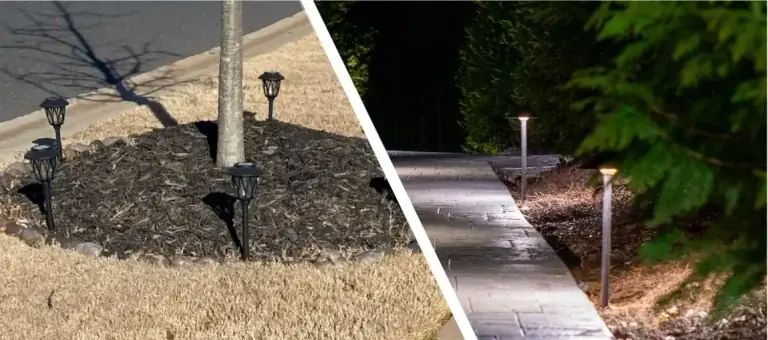
Relying on cheap, low-grade replacement lamps introduces severe structural liabilities. When facilities attempt to cut corners by purchasing budget-tier LEDs or halogen alternatives, internal components often lack surge protection and robust thermal sinking. Consequently, these cheap components fail within months, multiplying long-term maintenance outlays rather than curbing them.
Deep Contextual Background
The economic landscape of exterior illumination has shifted dramatically over the past several decades, evolving from unregulated incandescent systems to sophisticated solid-state networks. During the era of traditional incandescent and halogen lighting, bulb replacement was accepted as an inevitable, high-frequency operational expense. Halogen lamps operated at extreme internal temperatures, causing tungsten filaments to degrade rapidly under standard outdoor operating conditions.
The commercialization of light-emitting diode technology promised near-permanent operational lifespans, theoretically eliminating frequent bulb purchases. However, early LED retrofits introduced unforeseen economic challenges. Many early-generation LED bulbs placed sensitive electronic drivers inside unsealed, thermally constrained landscape fixtures. When moisture infiltrated the housing or heat accumulated without escape routes, the internal electronics failed long before the theoretical diode lifespan.
Simultaneously, rising labor costs shifted the primary financial burden of outdoor lighting from hardware procurement to service execution. Because dispatching a technician to replace a failed fixture involves significant hourly billing, bulb reliability became paramount. Consequently, learning how to reduce landscape lighting bulb expenses evolved from a minor purchasing consideration into a major engineering discipline focused on total cost of ownership.
Conceptual Frameworks and Mental Models
Optimizing long-term exterior illumination budgets requires robust mental models that account for total cost of ownership, environmental degradation, and thermal dynamics.
The Total Cost of Ownership Matrix
This model separates initial procurement capital from ongoing maintenance labor and replacement part expenses. It demonstrates that a higher-cost, commercial-grade lamp with a multi-year warranty is vastly more economical than repeatedly purchasing budget alternatives that require frequent technician intervention.
The Thermal-Electronic Equilibrium
Solid-state illumination relies on delicate semiconductor junctions that are highly sensitive to excess heat. This mental model dictates that every fixture must provide a clear thermal conduction path to dissipate operating heat; otherwise, internal electronic drivers degrade prematurely.
The Environmental Seal Integrity Curve
Outdoor lighting fixtures exist in hostile sub-grade and sub-aerial environments. This model views fixture gaskets, O-rings, and waterproof potting as critical barriers protecting internal electronics from moisture-induced short circuits.
The Electrical Voltage Window
Electrical pressure fluctuations directly impact component survival. This framework highlights how maintaining stable operating voltage prevents both under-voltage driver strain and over-voltage thermal shock.
Key Categories and Architectural Variations
Mastering how to reduce landscape lighting bulb expenses involves navigating distinct equipment categories and architectural upgrades, each carrying specific economic trade-offs.
Integrated LED Fixtures vs. Retrofit Lamps
Choosing between sealed, factory-integrated LED luminaires and traditional fixtures that accept replaceable retrofit bulbs.
-
Trade-Offs: Integrated units offer superior thermal management and weather sealing, but require replacing the entire fixture upon failure. Retrofit lamps allow bulb-only swaps, but are prone to moisture ingress and poor heat sinking.
High-Efficiency Driver Integration
Upgrading standard constant-voltage systems to advanced drivers featuring built-in thermal foldback and surge suppression.
-
Trade-Offs: Higher upfront equipment cost, but drastically reduces electronics failure rates during seasonal lightning storms and voltage spikes.
Architectural Comparison Table
| Expense Reduction Strategy | Primary Engineering Mechanism | Initial Capital Outlay | Long-Term Maintenance Impact | Primary Limitation |
| Commercial-Grade Integrated LEDs | Sealed thermal management | High | Dramatically lowers failure frequency | Entire fixture replacement upon terminal failure |
| Silicone-Potting Retrofits | Internal moisture encapsulation | Moderate | Reduces sub-grade condensation shorts | Limited wattage and beam spread options |
| Smart Surge Suppression | Clamps transient voltage spikes | Moderate to High | Prevents sudden driver destruction | Requires dedicated enclosure space |
| Optimized Voltage Regulation | Stabilizes operating current | High | Eliminates thermal overload burnouts | Requires central electrical overhaul |
Realistic Decision Logic
When property operators evaluate how to reduce landscape lighting bulb expenses for an extensive commercial campus, decision logic must prioritize labor reduction over initial material savings. If a sprawling resort spends thousands of dollars annually dispatching electricians to replace burnt-out path lights, investing in sealed, commercial-grade integrated fixtures with ten-year warranties instantly eliminates ongoing replacement labor, yielding a rapid return on capital.
Detailed Real-World Scenarios
Examining practical operational challenges illustrates how mastering how to reduce landscape lighting bulb expenses prevents budget overruns across diverse properties.
Case Study A: The Coastal Resort Corrosion Crisis
A luxury coastal hotel faced catastrophic failure rates across its beachfront pathway illumination network, replacing hundreds of halogen lamps and retrofit LEDs every quarter.
-
Constraints: Aggressive salt-fog environment; high humidity; shifting sandy soils exposing sub-grade splices.
-
Decision Points: Management evaluated whether to continue buying bulk budget lamps or completely overhaul the infrastructure using marine-grade brass fixtures.
-
Failure Modes Identified: Salt-air corrosion penetrated standard aluminum housings, destroying internal sockets and creating electrical shorts that blew out lamps instantly.
-
Second-Order Effects: Constant service interventions damaged surrounding landscaping and drained the property’s maintenance budget through emergency labor billing.
-
Resolution: The facility transitioned entirely to solid marine-grade brass integrated LED fixtures featuring fully potted electronics, reducing annual hardware and labor expenditures by seventy percent.
Field Incident B: The Suburban Estate Over-Volting Loop
A large residential property experienced continuous bulb burnouts in a centralized garden zone despite installing premium LED retrofit lamps.
-
Constraints: Long cable runs; high-output transformer settings; unmonitored secondary taps.
-
Decision Points: The homeowner initially suspected defective manufacturing and repeatedly claimed warranty replacements without addressing root causes.
-
Failure Modes Identified: The transformer output was set to a 15-volt tap to compensate for a distant run, but the garden zone fixtures sat close to the power source, receiving 13.5 volts.
-
Second-Order Effects: The excess voltage pushed internal LED drivers past their thermal limits, causing rapid component degradation.
-
Resolution: The electrician reconfigured the circuit wiring, shifted the transformer tap down to 12 volts, and added an in-line voltage regulator, instantly halting the premature burnouts.
Operational Deployment C: The Urban Corporate Campus Retrofit
A multi-building corporate headquarters sought a comprehensive strategy on how to reduce landscape lighting bulb expenses across aging halogen uplighting arrays.
-
Constraints: Strict corporate sustainability budgets; thousands of active fixture points; mandatory operational consistency.
-
Decision Points: Facilities leadership opted for a phased conversion to high-efficiency LED retrofit modules coupled with centralized smart dimming controls.
-
Failure Modes Identified: Early retrofit trials suffered from overheating inside deep-recessed uplight cans due to restricted airflow.
-
Second-Order Effects: Trapped heat degraded internal capacitors, causing premature flickering and color shifting.
-
Resolution: Engineers redesigned the fixture cowlings to incorporate passive cooling fins, ensuring optimal thermal dissipation and achieving full project ROI within eighteen months.
Planning, Cost, and Resource Dynamics
Administering an effective expense reduction strategy requires balancing initial hardware investments against ongoing maintenance labor liabilities.
Direct and Indirect Financial Realities
When analyzing how to reduce landscape lighting bulb expenses, budget planners must account for the hidden costs of technician downtime, service vehicle dispatch, and administrative procurement overhead. Purchasing a five-dollar generic bulb instead of a twenty-dollar commercial-grade module creates an illusion of savings while multiplying annual labor intervention costs.
Opportunity Cost and Resource Allocation
Facilities teams trapped in a continuous cycle of reactive bulb replacements waste valuable labor hours that could otherwise be dedicated to preventive infrastructure maintenance. Investing capital into robust, weather-sealed equipment frees up maintenance teams for strategic property improvements.
Financial and Resource Allocation Range Table
| Equipment Tier | Average Hardware Cost | Expected Lifespan | Typical Maintenance Labor Burden | Overall Economic Efficiency |
| Consumer-Grade Retrofit | $3 – $8 per unit | 1,000 – 3,000 hours | High (Frequent replacements required) | Poor (High long-term cost) |
| Mid-Tier Commercial LED | $15 – $35 per unit | 25,000 – 40,000 hours | Moderate (Occasional driver failure) | Moderate |
| Premium Marine-Grade Integrated | $75 – $200+ unit | 50,000+ hours | Very Low (Multi-year stability) | High (Optimal long-term ROI) |
| Smart Surge Mitigation Hub | $200 – $600 system | N/A (Protects downstream) | Low (Prevents catastrophic surges) | High for large-scale arrays |
Tools, Strategies, and Support Systems
Executing precise expense reduction requires specialized diagnostic instruments, maintenance software, and robust protective hardware.
1. True-RMS Digital Multimeters
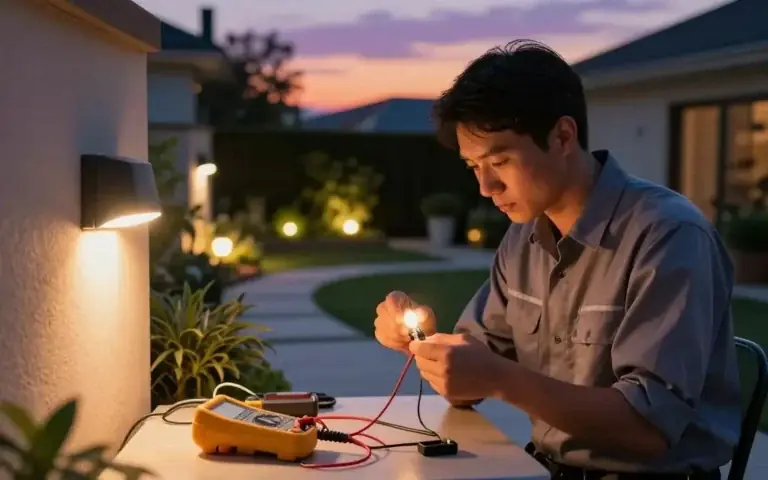
Technicians use calibrated multimeters to verify that operating voltage matches manufacturer specifications, preventing thermal overloads caused by electrical surges.
2. Thermal Imaging Infrared Cameras
Infrared inspection tools allow maintenance teams to detect overheating fixtures and failing electronic drivers before catastrophic burnout occurs in the field.
3. Sub-Grade Gel-Filled Splice Enclosures
Protecting wire connections with industrial waterproof gel capsules prevents moisture ingress from short-circuiting upstream lamp circuits.
4. Computerized Maintenance Management Systems (CMMS)
Tracking fixture installation dates, failure logs, and warranty replacement cycles helps facilities managers identify defective product batches and optimize procurement choices.
5. Clamp-On Ammeters
Measuring live current draw across individual circuit runs ensures that fixtures operate within safe electrical parameters without drawing excessive amperage.
6. Environmental Sealing and O-Ring Toolkits
Maintaining a supply of high-grade silicone O-rings and replacement gaskets ensures that opened fixtures are properly re-sealed against seasonal moisture.
Risk Landscape and Failure Modes
Failing to properly manage landscape lighting bulb expenses through a holistic engineering lens exposes facilities to compounding operational risks.
Moisture Ingress and Electrolytic Corrosion
Sub-grade junction boxes and poorly sealed fixtures accumulate condensation. When moisture contacts live electrical terminals, it triggers rapid electrolytic corrosion, destroying lamp bases and shorting out drivers.
Thermal Runaway in Enclosed Fixtures
Placing high-output LED modules inside tightly sealed, unventilated ground wells traps thermal energy. This continuous heat accumulation degrades internal semiconductor junctions, leading to premature luminous decay and sudden failure.
Transient Voltage Surges from Lightning
Unprotected exterior lighting networks are highly vulnerable to nearby lightning strikes and grid fluctuations. These high-voltage spikes instantly fry sensitive internal LED drivers, rendering expensive lamps useless in a fraction of a second.
Governance, Maintenance, and Long-Term Adaptation
Administering long-term financial control over illumination networks requires disciplined operational reviews, seasonal protocols, and systematic tracking checklists.
-
Quarterly Thermal and Electrical Audits: Facilities teams inspect fixture temperatures and socket voltages four times a year to catch emerging hardware stress early.
-
Warranty Tracking and Vendor Accountability: Maintaining a centralized database of equipment warranties ensures that failed commercial-grade components are systematically replaced at no additional cost.
-
Layered Maintenance Checklist:
-
Test terminal socket voltage under full operating load using a True-RMS multimeter.
-
Inspect fixture seals, O-rings, and glass lenses for cracking or moisture accumulation.
-
Clean exterior debris and mineral deposits off fixture lenses to maintain thermal efficiency.
-
Verify sub-grade splice vault integrity and check for standing water or compromised gel caps.
-
Measurement, Tracking, and Evaluation
Assessing the financial and operational success of an illumination maintenance program requires monitoring both quantitative expense metrics and qualitative performance signals.
Leading and Lagging Indicators
Leading indicators include stable operating voltages, low thermal imaging readings, and complete adherence to preventative audit schedules. Conversely, lagging indicators reflect failing maintenance strategies, such as rising annual parts expenditure, increasing emergency service ticket volume, and recurring fixture outages.
Common Misconceptions and Oversimplifications
1. Purchasing the cheapest available replacement bulb always lowers operating expenses.
Budget lamps lack durable internal electronics and thermal management, leading to rapid failure cycles that drastically multiply labor and replacement costs.
2. LED lamps installed outdoors never require maintenance or environmental protection.
While solid-state diodes last tens of thousands of hours, unsealed fixtures exposed to moisture and heat will experience premature electronic failure.
3. Voltage fluctuations have no impact on overall bulb lifespan.
Operating exterior lamps outside their specified voltage window causes severe thermal stress and drastically shortens component life.
4. Cleaning exterior fixture lenses is purely aesthetic and unrelated to hardware survival.
Accumulated dirt and debris trap thermal energy on the lens surface, accelerating internal heat buildup and degrading electronic drivers.
5. All fixture enclosures provide equal protection against aggressive weather conditions.
Consumer-grade aluminum enclosures corrode rapidly in coastal or wet environments compared to marine-grade brass or composite materials.
6. Warranty coverage eliminates the need for careful hardware selection.
While warranties provide replacement parts, they rarely cover the expensive labor required to unearth, service, and reinstall failed landscape fixtures.
Ethical, Practical, and Contextual Considerations
Mastering how to reduce landscape lighting bulb expenses extends beyond financial accounting into environmental sustainability. Using fragile, short-lived lamps generates unnecessary electronic waste, contributing discarded circuit boards and hazardous materials to local landfills. By investing in durable, repairable, commercial-grade lighting infrastructure, property operators minimize replacement frequency, reduce resource consumption, and foster sustainable environmental stewardship across outdoor architectural spaces.
Conclusion
Mastering the technical and financial principles behind how to reduce landscape lighting bulb expenses is essential for long-term operational success. Relying on reactive replacements, cheap consumer-grade hardware, and unmonitored electrical systems guarantees escalating maintenance overhead and perpetual frustration. By investing in rigorous thermal engineering, weather-sealed marine-grade fixtures, stable voltage regulation, and proactive auditing, property managers secure a resilient, cost-effective exterior illumination network that delivers flawless performance and exceptional fiscal efficiency for decades.