Common Landscape Lighting Placement Mistakes Expert Guide
Exterior architectural illumination networks require precise spatial geometry to balance nighttime aesthetics, pedestrian safety, and ecological harmony. Property owners and novice installers frequently approach exterior lighting as an intuitive exercise of placing fixtures near focal points without structured planning. Yet, uncalculated fixture positioning introduces severe visual and operational defects. When luminaires are improperly angled, misaligned relative to architectural planes, or poorly spaced along pedestrian corridors, the entire nightscape degrades into a chaotic display of blinding glare and deep shadows.
Correcting these spatial errors involves far more than simply twisting a fixture angle or swapping a bulb. True mastery of exterior lighting design requires a comprehensive understanding of human vision adaptation, beam spread physics, and environmental context. Poorly positioned hardware not only ruins the nocturnal ambiance of an estate but also generates aggressive light trespass, disturbs local fauna, and creates dangerous safety hazards for visitors navigating dark pathways.
This reference manual provides an exhaustive structural and operational framework for analyzing, identifying, and correcting spatial deployment errors in outdoor lighting systems. The following sections dissect glare vectors, optical overlap mechanics, and systemic planning methodologies designed to ensure optimal visual performance. Through rigorous analysis of environmental parameters, fixture geometry, and long-term asset stewardship, this guide establishes a definitive technical standard for professional exterior lighting engineering.
Understanding “common landscape lighting placement mistakes”
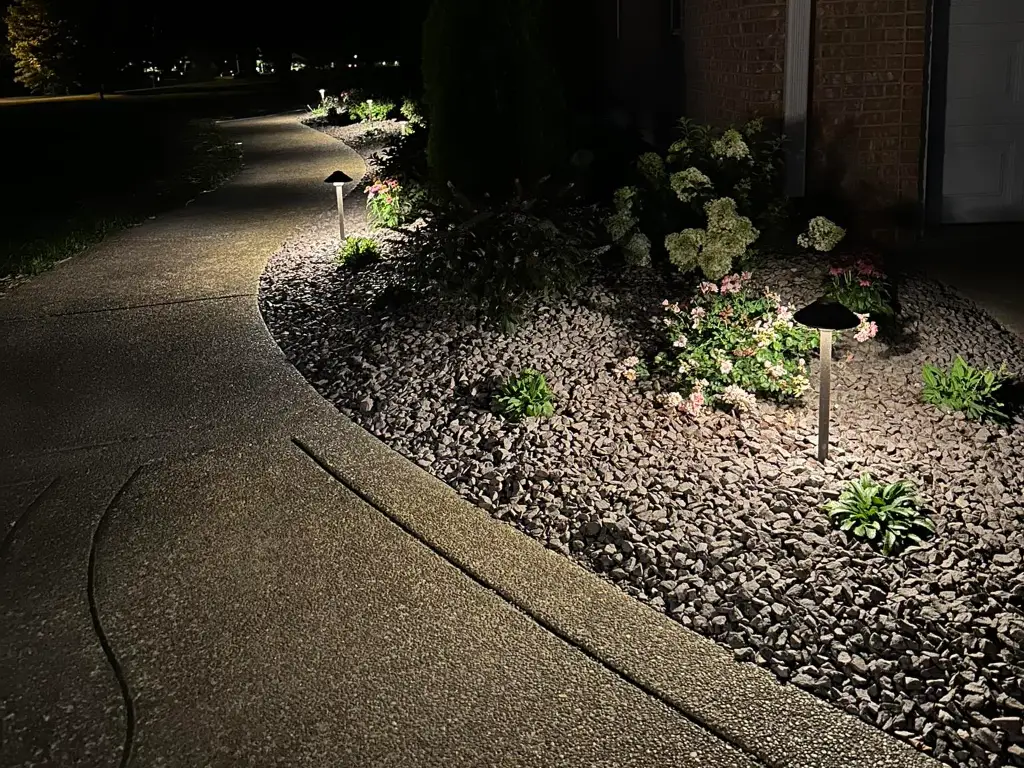
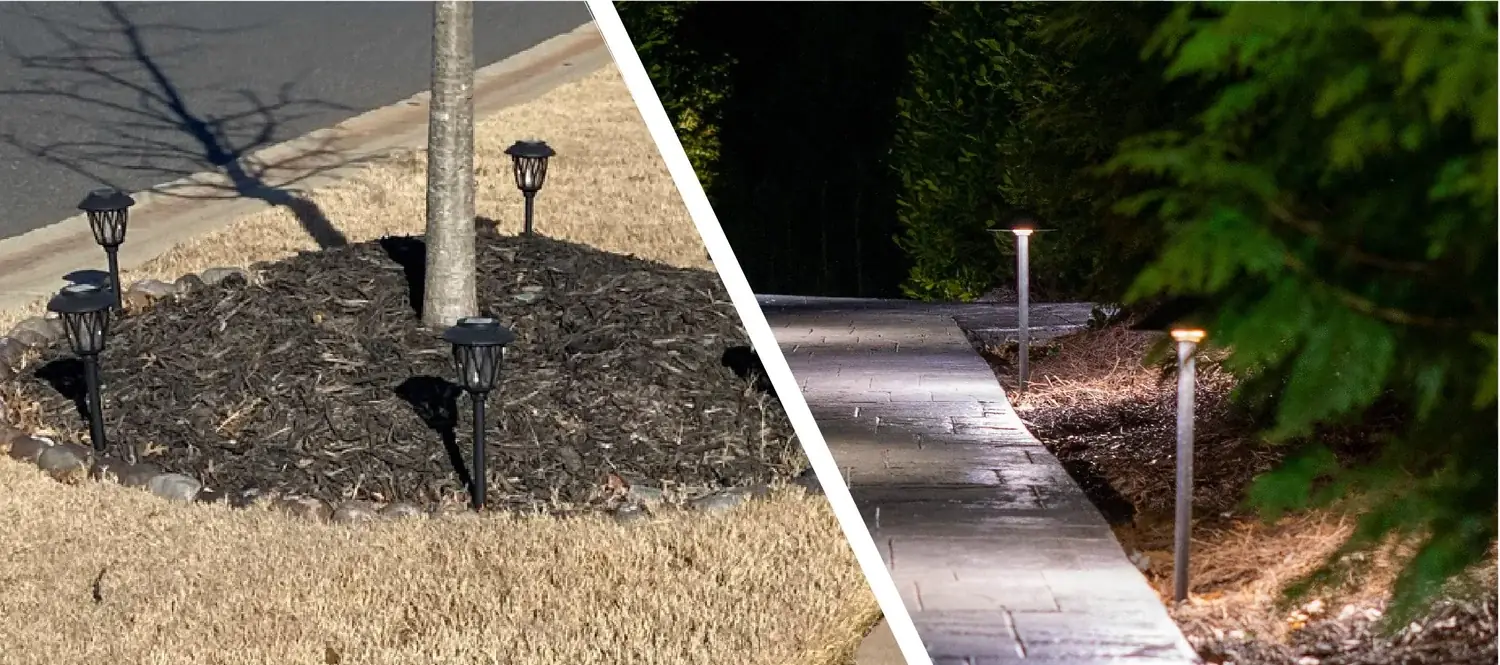
When professionals examine common landscape lighting placement mistakes, the primary objective is identifying why seemingly well-equipped lighting designs fail to achieve visual harmony or operational effectiveness. A frequent error involves installing path lights in rigid, symmetrical rows along a straight line, creating an unintended runway effect that mimics an airport tarmac rather than an inviting residential garden walk. Another prevalent issue is mounting powerful uplights directly at the base of mature tree trunks without shielding, causing harsh vertical glare that blinds observers and washes out natural bark textures.
A widespread misconception views lighting placement as a superficial aesthetic choice dictated solely by personal taste. This oversimplification ignores the psychological impact of contrast ratios and the physiological mechanics of human night vision. In reality, mastering how to avoid common landscape lighting placement mistakes requires understanding how light interacts with foliage density, architectural hardscapes, and ambient background darkness.
Relying on ad-hoc, trial-and-error installation methods introduces severe structural liabilities. When installers place fixtures without calculating beam spread angles or accounting for seasonal foliage growth, the system quickly becomes obsolete or visually abrasive. True professional design demands rigorous upfront spatial planning, ensuring every luminaire serves a distinct optical and safety purpose.
Deep Contextual Background
The evolution of exterior lighting placement reflects a major industrial transition from high-intensity, unshielded halogen floodlights to highly directional, energy-efficient solid-state LED fixtures. During the early decades of residential landscape illumination, fixtures possessed wide, unrefined beam spreads that forced installers to rely on brute-force wattage to light large outdoor spaces. Consequently, exact placement precision was less critical because massive pools of uncontrolled light washed over entire landscapes, masking individual spatial errors.
The commercialization of tight-beam light-emitting diode technology fundamentally transformed optical requirements. Modern LED luminaires offer precise beam angles ranging from narrow 15-degree spots to wide 60-degree floods. This technological precision means that a placement error of mere inches or a slight angular miscalculation results in glaring hot spots, unwanted light spill into neighboring properties, or entirely unilluminated architectural voids.
Simultaneously, rising municipal ordinances regulating dark-sky compliance and light trespass increased the legal and aesthetic stakes of proper fixture positioning. Consequently, learning how to avoid common landscape lighting placement mistakes evolved from an informal DIY preference into a sophisticated technical discipline focused on spatial discipline, optical efficiency, and environmental responsibility.
Conceptual Frameworks and Mental Models
Designing exterior electrical networks without spatial defects requires robust mental models that account for human vision, optical geometry, and environmental contrast.
The Human Adaptation Horizon
This foundational model recognizes that the human eye adapts to ambient nighttime darkness. A single unshielded fixture placed at eye level creates a blinding glare source that destroys night vision adaptation, rendering surrounding shadows completely opaque and unsafe.
The Beam Spread Interlock
Instead of viewing fixtures as isolated points of light, this mental model treats each luminaire’s beam spread as a cone that must overlap seamlessly with adjacent cones. Proper interlock prevents dark gaps along pathways and eliminates chaotic hot spots.
The Architectural Counter-Point
This framework dictates that lighting should respect the natural vertical and horizontal lines of a structure or landscape feature. Placing uplights too close to a wall creates harsh vertical scallops, while pulling fixtures back reveals balanced, graceful wall grazing.
The Seasonal Foliage Horizon
Deciduous trees shed leaves, and shrubs grow rapidly. This mental model requires anticipating future vegetation density during initial placement, ensuring fixtures are not swallowed by dense summer shrubbery or left completely exposed in winter.
Key Categories and Architectural Variations
Mastering how to avoid common landscape lighting placement mistakes involves navigating distinct spatial categories and fixture deployment topologies, each carrying specific engineering trade-offs.
Path Light Spacing and Symmetrical Grid Errors
Placing bollards or path luminaires in rigid, evenly spaced rows on both sides of a walkway.
-
Trade-Offs: Provides predictable illumination coverage, but creates a sterile airport runway aesthetic and wastes capital on redundant hardware.
Uplight Distance and Wall Grazing Geometry
Positioning architectural uplights directly against building facades or tree trunks without setback clearance.
-
Trade-Offs: Maximizes light intensity on the subject, but produces extreme vertical light scallops, severe glare, and zero depth perception.
Downlighting (Moonlighting) Height and Canopy Integration
Suspending fixtures high within tree branches to simulate natural moonlight filtering through foliage.
-
Trade-Offs: Achieves breathtaking organic realism and wide coverage, but presents significant installation complexity and maintenance access challenges.
Step and Hardscape Recessed Placement
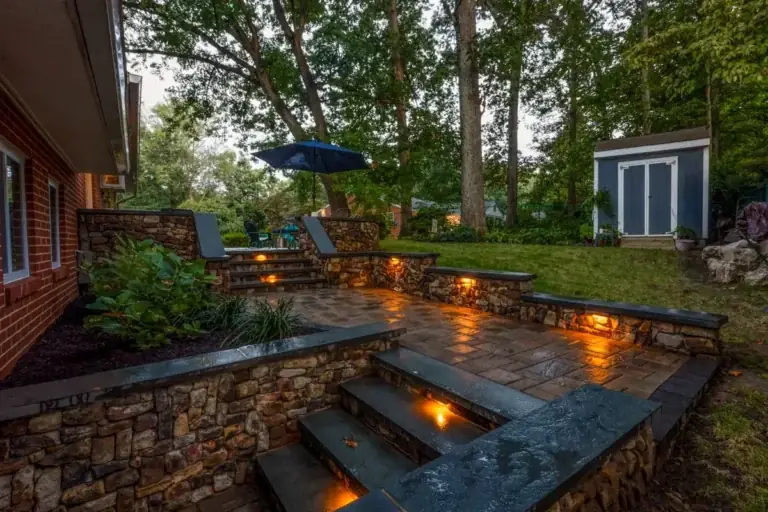
Embedding low-voltage luminaires into stair risers, retaining walls, or paving joints.
-
Trade-Offs: Eliminates vertical tripping hazards and provides clean architectural lines, but requires meticulous core-drilling and waterproofing during hardscape construction.
Architectural Comparison Table
| Placement Category | Primary Spatial Error | Correct Engineering Approach | Major Operational Advantage | Primary Limitation |
| Path Illumination | Symmetrical runway rows | Staggered zigzag spacing | Natural, balanced visual guidance | Requires careful calculation |
| Tree Uplighting | Direct trunk mounting at base | Set back 2-4 feet with cowls | Reveals true 3D bark texture | Exposed fixtures in turf zones |
| Facade Grazing | Flush positioning against walls | Set back 12-18 inches | Smooth, even vertical wall wash | Limited beam spread flexibility |
| Step Recessing | Glare-heavy face-mounted units | Shielded louvered faceplates | Safe, downward-directed riser light | Difficult post-pour retrofitting |
Realistic Decision Logic
When property designers evaluate how to avoid common landscape lighting placement mistakes for a complex residential estate, decision logic must balance viewing angles against functional safety. If a grand stone retaining wall is illuminated by uplights placed flush against the masonry, the harsh vertical light beams highlight every minor flaw in the mortar and blind guests walking on the patio. By pulling the fixtures back eighteen inches and equipping them with optical honeycombs and cowls, the light grazes the stone surface smoothly, revealing rich textural depth without causing glare.
Detailed Real-World Scenarios
Examining practical spatial management scenarios illustrates how mastering how to avoid common landscape lighting placement mistakes prevents operational failures across diverse real-world properties.
Case Study A: The Suburban Driveway Runway Error
A residential property owner installed twenty pathway bollards in rigid, parallel rows down both sides of a long concrete driveway.
-
Constraints: Straight linear approach; bright retail LED fixtures; lack of landscape borders.
-
Decision Points: The owner evaluated whether to leave the installation or undertake a complete spatial reconfiguration after neighbors complained of severe light trespass.
-
Failure Modes Identified: Symmetrical placement created an overwhelming runway effect, while unshielded 360-degree lenses blinded motorists entering the driveway at night.
-
Second-Order Effects: The blinding glare made it impossible for drivers to judge the edges of the concrete, leading to tire damage on adjacent turf.
-
Resolution: The installer removed half the fixtures, reconfigured the remaining units into a staggered asymmetric pattern, and swapped the unshielded heads for cowled directional path lights.
Field Incident B: The Commercial Corporate Plaza Glare Hazard
A corporate headquarters installed powerful ground-recessed uplights directly in front of the main glass-paneled entrance doors.
-
Constraints: High foot traffic; polished stone paving; expansive architectural glazing.
-
Decision Points: Facilities management assessed why employees and visitors squinted and shielded their eyes when approaching the building after dusk.
-
Failure Modes Identified: Uplights positioned directly in the primary walking path directed high-intensity light beams straight into the eyes of oncoming pedestrians.
-
Second-Order Effects: The intense glare created severe visual disability, increasing slip-and-fall hazards on the front steps.
-
Resolution: Contractors relocated the uplights backward into adjacent planter beds, angled them toward architectural columns, and installed frosted glare-control lenses.
Operational Deployment C: The Botanical Estate Canopy Miscalculation
A botanical garden attempted to install moonlighting fixtures high in a mature oak tree canopy to illuminate a winding garden pavilion path.
-
Constraints: Towering deciduous trees; strict preservation rules prohibiting trunk-penetrating hardware; high winds.
-
Decision Points: Lighting designers evaluated hanging mechanisms versus cable-suspension spanning systems.
-
Failure Modes Identified: Initial rigid mounting brackets screwed directly into major limbs threatened tree health and snapped during severe winter storms.
-
Second-Order Effects: Falling hardware damaged delicate understory plants and created liability risks for park visitors.
-
Resolution: Engineers transitioned to non-invasive stainless steel cable sling suspensions that allow the fixtures to sway naturally with the tree branches without causing bark damage.
Planning, Cost, and Resource Dynamics
Administering an effective spatial placement strategy requires understanding the economic relationship between initial layout planning, fixture positioning precision, and long-term maintenance adjustments.
Direct and Indirect Financial Realities
When calculating how to avoid common landscape lighting placement mistakes, project planners must weigh the upfront time investment of professional night-time aiming sessions against the costly service callbacks required to fix glaring installation errors. Rushing fixture placement during daylight hours guarantees severe optical misalignment that requires expensive corrective labor later.
Opportunity Cost and Resource Allocation
Contractors and homeowners must balance installation speed against spatial accuracy. Spending hours fine-tuning fixture angles during twilight hours ensures flawless aesthetic results and protects the property owner’s capital investment from disappointing visual outcomes.
Financial and Resource Allocation Range Table
| Placement Planning Activity | Typical Time Investment | Labor Cost Impact | Long-Term Quality Impact | Economic Efficiency |
| Daylight-Only Installation | Low (Quick placement) | Minimal upfront cost | Poor (Frequent glare errors) | High initial risk |
| Nighttime Aiming & Mock-Up | Moderate to High | Moderate labor investment | Exceptional optical precision | Optimal long-term value |
| Seasonal Foliage Audit | Low (Biannual review) | Low ongoing maintenance | Prevents overgrown blockages | High asset preservation |
| Glare Shield Retrofitting | Low per unit | Low corrective labor | Eliminates light trespass complaints | High operational fix |
Tools, Strategies, and Support Systems
Executing precise fixture placement requires specialized diagnostic instruments, temporary mockup tools, and robust alignment systems.
1. Temporary Battery-Powered Mockup Lights
Installers use portable, battery-operated LED fixtures to test exact placement heights and beam angles in real time before trenching permanent cable lines.
2. Digital Light Meters (Lux/Foot-Candle Meters)
Technicians measure illumination levels across pathways and architectural surfaces to ensure compliance with safety standards and prevent over-lighting.
3. Glare Shields and Snoots
Adding physical cowls, honeycomb louvers, and shrouds to directional fixtures blocks lateral light leakage and eliminates observer glare.
4. Telescoping Alignment Poles
Using adjustable extension poles allows technicians to evaluate high-branch moonlighting placement safely from ground level before climbing.
5. Laser Angle Finders
Calibrated laser tools help installers achieve precise tilt angles on architectural uplights, ensuring consistent wall grazing across expansive facades.
6. Soil Stabilization Stakes
Securing fixture mounting stakes with heavy-duty stabilization discs prevents soil settling from altering carefully calibrated lighting angles over time.
Risk Landscape and Failure Modes
Failing to properly manage spatial placement errors exposes exterior lighting networks to compounding physical, legal, and aesthetic risk vectors.
Light Trespass and Neighbor Disputes
Unshielded fixtures angled away from their targets project unwanted light into neighboring bedroom windows, generating severe community friction and municipal code violations.
Visual Fatigue and Safety Hazards
Blinding glare sources diminish pedestrian night vision, concealing tripping hazards along dark walkways and increasing premises liability risks.
Vegetation Interference and Fire Hazards
Placing high-intensity halogen or poorly heatsinked LED uplights directly against dense dry brush creates localized thermal hot spots that can scorch foliage.
Governance, Maintenance, and Long-Term Adaptation
Administering long-term control over lighting placement accuracy requires disciplined operational reviews, seasonal protocols, and systematic tracking checklists.
-
Seasonal Foliage and Growth Audits: Inspect fixture clearances every spring and autumn to trim encroaching ground cover and maintain unobstructed optical paths.
-
Nighttime Alignment Reviews: Conduct annual evening walk-through inspections to verify that soil settling or landscape maintenance has not knocked fixtures out of alignment.
-
Layered Maintenance Checklist:
-
Verify fixture tilt angles and ensure glare shields remain securely fastened.
-
Check for overgrown plant material blocking light distribution paths.
-
Test illumination uniformity across pedestrian walkways using a light meter.
-
Inspect ground stakes for stability and correct any tilting caused by soil erosion.
-
Measurement, Tracking, and Evaluation
Assessing the ongoing performance and visual success of an illumination placement plan involves monitoring both qualitative and quantitative indicators.
Leading and Lagging Indicators
Leading indicators include perfect optical overlap without dark gaps, complete absence of direct glare along viewing corridors, and positive aesthetic feedback. Conversely, lagging indicators reflect poor placement, such as citizen complaints regarding light trespass, pedestrian tripping incidents, and frequent fixture readjustment service calls.
Common Misconceptions and Oversimplifications
1. Fixture placement can be planned accurately using daylight blueprints alone.
Daylight plans fail to account for nighttime contrast ratios, shadows, and how light reflects off different hardscape materials; nighttime mock-ups are essential.
2. Placing more fixtures closer together automatically improves landscape illumination quality.
Over-illuminating a property washes out natural shadows, creates blinding glare, and ruins the subtle atmospheric contrast of a nightscape.
3. Symmetrical pathway lighting grids look professional and sophisticated.
Rigid, straight rows of bollards create an artificial runway effect that clashes with organic landscape architecture.
4. Uplights should always be positioned flush against the base of trees or walls.
Flush mounting creates harsh vertical light scallops and severe glare; setting fixtures back provides smooth, balanced illumination.
5. Landscape lighting fixtures once installed never require repositioning.
As trees grow, shrubs mature, and soil shifts, fixtures inevitably require seasonal alignment adjustments to maintain their original design intent.
6. Shielding is only necessary if neighbors complain about light trespass.
Proper optical shielding is an essential design standard that prevents direct glare for visitors and protects human night vision adaptation.
Ethical, Practical, and Contextual Considerations
Mastering how to avoid common landscape lighting placement mistakes extends beyond aesthetic design into environmental stewardship and dark-sky preservation. Unshielded, poorly directed exterior lighting contributes to skyglow, disrupts nocturnal wildlife migration patterns, and wastes electrical energy by casting light upward into empty space. By implementing precise shielding, careful downward-directed placement, and thoughtful spatial geometry, lighting professionals minimize environmental disruption, protect nocturnal ecosystems, and foster sustainable architectural stewardship across outdoor spaces.
Conclusion
Mastering the technical and spatial principles behind common landscape lighting placement mistakes is essential for long-term architectural illumination success. Relying on intuitive guesswork, unshielded fixtures, and rigid grid layouts guarantees visual clutter, blinding glare, and frustrated property owners. By investing in rigorous nighttime mock-ups, careful beam spread calculations, proper optical shielding, and ongoing seasonal alignment, property managers and designers secure a resilient, elegant exterior lighting infrastructure. Ultimately, thorough spatial planning transforms outdoor illumination from an erratic display into a permanent, harmonious asset.